
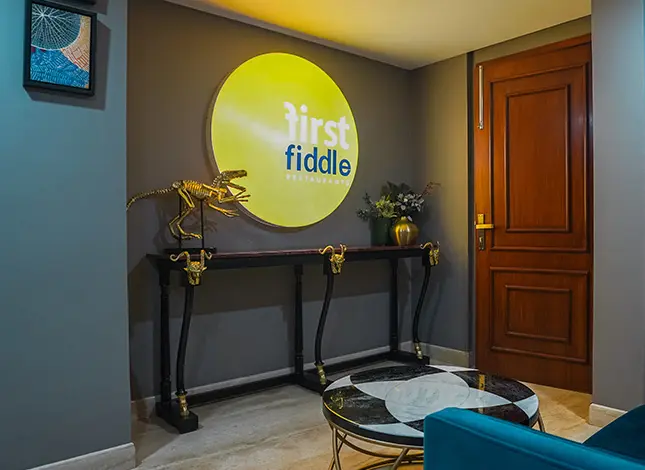

The Indian restaurant industry is no longer only about serving good food. Today, restaurants are built around concepts, experiences, ambience, branding and stories.
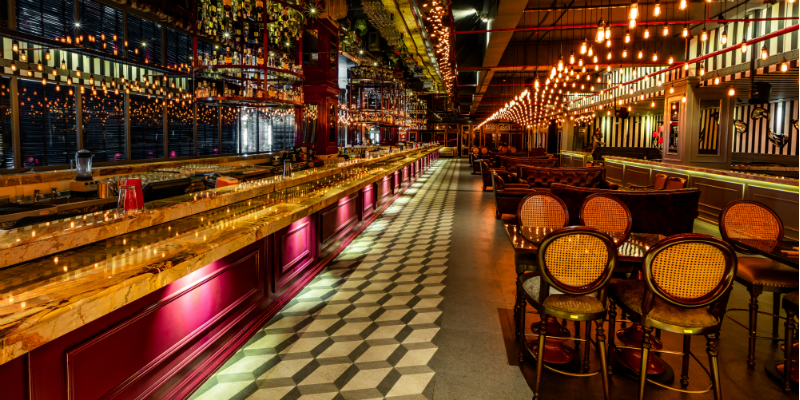
The journey of First Fiddle Restaurants is an interesting example of this evolution. The company describes itself as a pioneer in casual and experiential dining and says it has been shaping the industry for more than two decades.
Behind this journey is entrepreneur Priyank Sukhija, whose career in the F&B industry began at a young age and eventually developed into a portfolio of different restaurant concepts.
For Bakaasura, the First Fiddle story is not simply about the number of outlets. It is about understanding how a restaurant can become a brand, an experience and eventually a larger business ecosystem.
The Beginning: Lazeez Affaire
The First Fiddle story began with Lazeez Affaire, a restaurant concept that became an important starting point for Priyank Sukhija’s journey in the food and hospitality business.
Starting a restaurant is fundamentally different from building a restaurant company. One outlet requires operational discipline, while multiple brands require a much broader understanding of consumer behaviour, positioning, people, finance, marketing and scalability.
That transition became an important part of the First Fiddle journey.
From Restaurant to Restaurant Concepts
One of the notable elements of First Fiddle’s story is its focus on creating different concepts rather than relying on a single restaurant identity.
Its current brands page lists concepts including Diablo, Lord of The Drinks, Lazeez Affaire, Miso Sexy, Warehouse Cafe, Tickled Pink and others.
Each concept can target a different occasion and customer expectation.
This approach demonstrates an important principle in the F&B industry:
A restaurant brand does not always have to sell the same experience to everyone.
Different concepts can be designed around different combinations of cuisine, ambience, entertainment and social experiences.
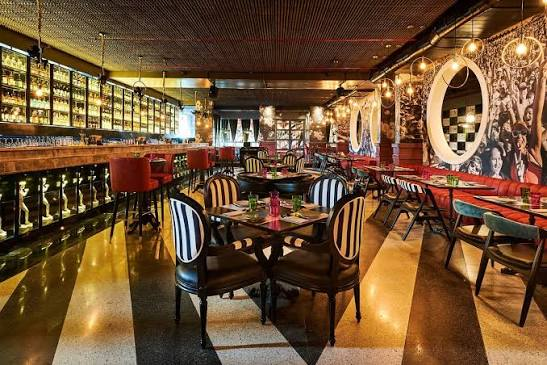
The Rise of Experiential Dining
First Fiddle describes itself as a pioneer in casual and experiential dining.
This is significant because the modern restaurant visit is often more than a meal.
Customers may visit a restaurant for:
- Food
- Ambience
- Music
- Interior design
- Social occasions
- Celebrations
- Entertainment
- Photography and social media experiences
- A particular brand identity
The restaurant therefore becomes part of the customer’s overall experience.
This shift has created opportunities for F&B entrepreneurs to think beyond menus and recipes and focus on the complete customer journey.
Building Multiple Brands
The First Fiddle model illustrates another important aspect of restaurant entrepreneurship: portfolio thinking.
Instead of building one restaurant and stopping there, the business has developed multiple concepts under the broader First Fiddle identity.
Read this – India’s top restaurant founders and restaurateurs
The company’s current website showcases several brands across its portfolio, reflecting its multi-concept approach to the F&B sector.
For a restaurant entrepreneur, this creates a different set of challenges.
Managing one outlet may involve:
Kitchen → Staff → Customers → Inventory → Daily Sales
A larger restaurant group has to think about:
Brand → Operations → Marketing → People → Expansion → Customer Experience → Business Systems
That difference is what turns a restaurant operation into an F&B company.
Franchise and Expansion
First Fiddle’s business model also extends beyond company-operated restaurant concepts.
Its franchise offering presents a FOFO — Franchise Owned, Franchise Operated model and describes support across areas such as property setup, design, staffing, sales, marketing and operations.
This illustrates another stage in the growth of a restaurant business.
Once a concept has a recognizable identity and operating system, franchising can become one route for expanding the brand into additional markets.
However, scaling a restaurant brand is not simply about opening more locations. Maintaining food quality, service standards, brand consistency and customer experience becomes increasingly important as the network grows.
What Restaurant Founders Can Learn From the First Fiddle Story
1. Start With a Clear Concept
A restaurant needs more than a menu.
The concept should answer a simple question:
Why should customers choose this restaurant instead of another one?
That answer can come through cuisine, ambience, price, entertainment, service or a distinctive experience.
2. Think About the Brand, Not Just the Outlet
An individual restaurant is a physical location.
A brand can travel beyond that location.
The First Fiddle story demonstrates the importance of creating recognizable concepts that can potentially operate across different locations.
3. Understand Different Customer Occasions
People don’t visit restaurants for exactly the same reasons.
One customer may want a family dinner. Another may want a casual evening with friends. Someone else may be looking for nightlife or an experiential outing.
Different concepts can address different occasions.
4. Build Systems Before Scaling
Expansion increases complexity.
As the number of restaurants grows, systems around hiring, training, procurement, marketing, operations and quality control become increasingly important.
5. Make Experience Part of the Product
Food remains central to every restaurant.
But in experiential dining, the product can extend to the entire experience surrounding the meal.
That includes the moment a customer enters the restaurant until the time they leave.
The Bigger Story Behind First Fiddle
The First Fiddle journey represents an important evolution in India’s restaurant industry: the movement from individual restaurants to multi-brand F&B businesses.
The company’s own website currently positions First Fiddle around casual and experiential dining and presents a portfolio of multiple restaurant concepts.
The story also shows why restaurant entrepreneurship requires more than culinary knowledge.
It requires understanding:
Food + People + Experience + Branding + Operations + Business
That combination is what allows an F&B idea to potentially grow beyond a single restaurant.
Must know this – Lite Bite Foods: The Journey of Building a Multi-Brand Food Empire
More Than a Restaurant Story
Every successful restaurant has two stories.
One is written on the plate.
The other is written behind the scenes — through the decisions, risks, people, failures, experiments and persistence that build the business.
The First Fiddle journey is one such F&B story.
From the early restaurant journey associated with Lazeez Affaire to a portfolio of different dining concepts, its story offers an interesting look at how restaurant entrepreneurship can evolve into brand building and business expansion.
At Bakaasura, we believe every restaurant has a story worth telling — the story behind the food, the people and the vision that brought it to life.
Because every great meal has a story behind it.

[…] Priyank Sukhija, creativity became an important part of the restaurant […]
[…] Read this – First Fiddle Restaurants Journey: The Story Behind a Multi-Brand F&B Business […]
[…] Read this – First Fiddle Restaurants Journey: The Story Behind a Multi-Brand F&B Business […]
[…] Read this – First Fiddle Restaurants Journey: The Story Behind a Multi-Brand F&B Business […]