
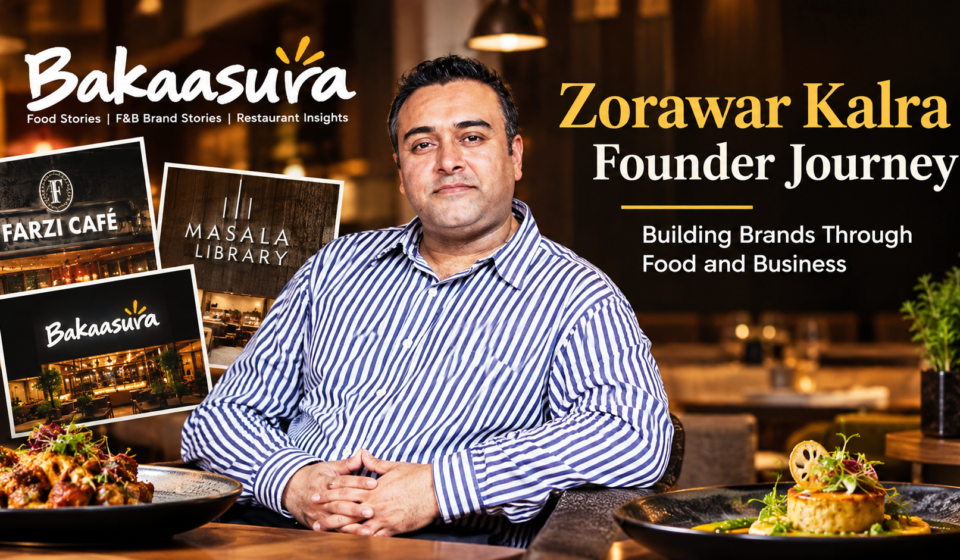

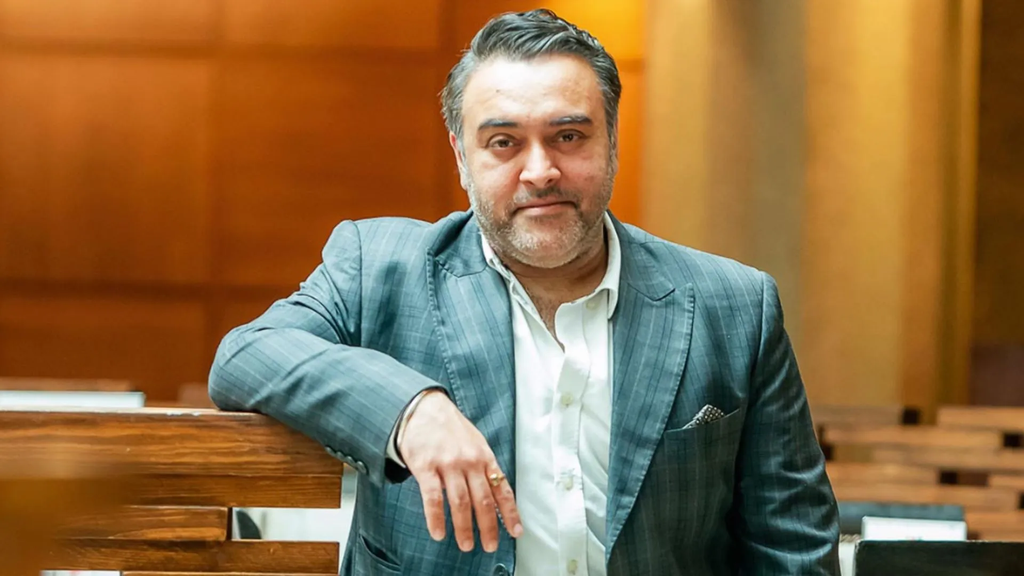
Zorawar Kalra is an Indian restaurateur and entrepreneur known for building restaurant concepts that combine Indian cuisine, international culinary influences, modern presentation and strong brand identities. As the founder and managing director of Massive Restaurants, he became associated with some of India’s widely recognised contemporary dining concepts, including Farzi Café, Made in Punjab, Masala Library and Pa Pa Ya.
Coming from a family already connected to the restaurant business, Kalra was exposed to food and hospitality from an early age. His father, Jaspal Inder Singh Kalra, popularly known as Jiggs Kalra, was a celebrated food writer, television personality, culinary consultant and restaurateur. This background gave Zorawar an unusual introduction to cuisines, chefs, restaurants and the wider food industry.
However, Zorawar Kalra’s career was not simply an extension of his father’s legacy. After completing his education, including an MBA, he developed his own approach to restaurant entrepreneurship. He combined international travel, market research, branding, technology and contemporary Indian cuisine to create restaurants designed for a younger generation of diners.
His journey illustrates how modern restaurant businesses can be built around more than food. Concept development, interiors, presentation, storytelling, customer experience and scalability became equally important parts of his strategy.
Growing Up Around Food and Restaurants
Zorawar Kalra grew up in an environment where food was an important part of everyday life.
His father, Jiggs Kalra, had already established himself as one of India’s influential food personalities. Through his work as a food writer, television host and culinary expert, Jiggs Kalra travelled extensively and interacted with chefs, restaurants and culinary traditions.
This gave Zorawar early exposure to different cuisines and restaurant cultures.
Travel also became an important influence on his thinking.
As he encountered restaurants in different parts of the world, he was able to observe how international businesses approached food, interiors, service and branding.
These experiences later influenced his own restaurant concepts.
Learning Beyond the Family Business
Although Zorawar had access to the restaurant industry through his family, he did not immediately restrict himself to traditional Indian dining.
His education and professional experiences helped him develop an interest in the commercial side of hospitality.
He studied business and completed an MBA before moving deeper into the restaurant industry.
The combination of food knowledge and formal business education became an important part of his entrepreneurial approach.
From Food Knowledge to Restaurant Entrepreneurship
The Indian restaurant market was changing rapidly when Kalra began building his own business.
Urban consumers were becoming more familiar with international cuisines, global restaurant trends and social-media-driven food culture.
At the same time, there was increasing demand for Indian restaurants that could present traditional flavours in modern ways.
Kalra saw an opportunity between these two trends.
Rather than simply reproducing international restaurants in India, he wanted to create concepts that combined global influences with Indian culinary ideas.
This philosophy eventually became central to Massive Restaurants.
Read this – India’s top restaurant founders and restaurateurs
The Birth of Massive Restaurants
Zorawar Kalra founded Massive Restaurants as a platform for developing and operating multiple restaurant concepts.
Instead of relying on one restaurant brand, the company was designed around a portfolio strategy.
Different brands could target different audiences, cuisines and price segments.
This approach allowed Kalra to experiment with everything from modern Indian cuisine to Asian-inspired dining and premium casual restaurants.
The company’s portfolio eventually included several high-profile concepts.
Among the best known were:
- Farzi Café
- Made in Punjab
- Masala Library
- Pa Pa Ya
- Kode
- Some other evolving food and beverage concepts
The portfolio demonstrated Kalra’s interest in creating restaurants that could become recognisable brands rather than remaining single-location establishments.
Made in Punjab: Modernising Indian Cuisine
Made in Punjab became one of the important concepts in Kalra’s restaurant portfolio.
The restaurant focused on Punjabi cuisine while presenting it through a contemporary dining format.
The concept attempted to preserve familiar flavours while giving diners a more modern restaurant experience.
This approach reflected a broader trend in Indian hospitality.
Restaurants were increasingly experimenting with traditional cuisines instead of treating them as static culinary categories.
Presentation, interiors, service and menu descriptions became part of how traditional food was communicated to younger customers.
Masala Library: Fine Dining With a Modern Indian Identity
Masala Library represented another important step in Kalra’s restaurant journey.
The concept focused on contemporary Indian cuisine and sophisticated presentation.
Rather than positioning Indian food only through familiar dishes, the restaurant attempted to present Indian culinary traditions in a more experimental and fine-dining environment.
The concept was associated with chef Jiggs Kalra’s culinary legacy as well as Zorawar Kalra’s modern restaurant vision.
Masala Library became known for its tasting-menu-style approach, elaborate presentation and interpretation of Indian flavours.
For Kalra, it also demonstrated that Indian cuisine could be positioned within the contemporary global fine-dining conversation.
Farzi Café: Turning Indian Food Into an Experience
Farzi Café became one of the most recognisable brands associated with Zorawar Kalra.
The concept was built around the idea of taking familiar Indian dishes and giving them a modern, playful interpretation.
The restaurant’s name itself suggested a sense of humour and experimentation.
Farzi Café combined:
- Modern Indian food
- Contemporary presentation
- Cocktails
- Music
- Technology
- Dramatic plating
- Modern interiors
The restaurant became particularly popular among younger urban consumers.
The Importance of Presentation
One of Farzi Café’s defining characteristics was presentation.
Food was often served in visually striking ways, turning the meal into an experience.
This approach became increasingly valuable in the social-media era.
Customers were no longer simply eating at restaurants.
They were photographing dishes, sharing restaurant interiors and posting experiences online.
Farzi Café was designed to work within this environment.
Read this – Lite Bite Foods: The Journey of Building a Multi-Brand Food Empire
Pa Pa Ya and Asian-Inspired Dining
Pa Pa Ya expanded Massive Restaurants into contemporary Asian dining.
The concept combined Asian cuisines with modern presentation and a sophisticated restaurant environment.
It demonstrated Kalra’s broader strategy of creating specialised brands rather than forcing every culinary idea into the same restaurant.
The restaurant explored Japanese, Thai, Chinese and other Asian influences while maintaining a modern Indian hospitality perspective.
This approach reflected Kalra’s belief that international food trends could be adapted to Indian consumers.
Combining International Inspiration With Indian Markets
Travel played an important role in Kalra’s restaurant philosophy.
Exposure to restaurants around the world allowed him to observe emerging trends.
These included:
- Molecular and modernist cooking techniques
- Contemporary plating
- Restaurant technology
- Experiential dining
- Premium casual restaurants
- Open kitchens
- Bar-led dining
- Social-media-friendly presentation
However, the objective was not simply to copy international restaurants.
The challenge was to determine which ideas would work for Indian customers.
That process of adaptation became one of the defining features of his restaurant strategy.
Building Restaurants as Brands
Kalra’s approach focused heavily on branding.
A successful restaurant concept needed more than good food.
It required a memorable:
- Name
- Logo
- Interior
- Menu
- Service style
- Brand story
- Customer experience
Farzi Café, for example, developed a distinct identity that separated it from conventional Indian restaurants.
Masala Library created a premium culinary identity.
Made in Punjab focused on contemporary Punjabi cuisine.
Pa Pa Ya established a modern Asian proposition.
Each brand could therefore operate independently while benefiting from the larger infrastructure of Massive Restaurants.
Expansion Across India
Massive Restaurants expanded its concepts into several Indian cities.
Farzi Café became particularly associated with major urban markets and eventually expanded internationally as well.
The company entered cities including Delhi, Mumbai, Bengaluru, Pune, Hyderabad, Kolkata, Chandigarh and other locations through different concepts.
The expansion strategy reflected the growing demand for organised restaurant brands in India’s major metropolitan markets.
As the middle class and urban professional population expanded, consumers became increasingly willing to travel across cities and seek familiar restaurant brands.
International Expansion
Zorawar Kalra’s ambitions eventually moved beyond India.
Farzi Café and other concepts were introduced into international markets.
International expansion offered both opportunities and challenges.
Indian restaurant brands had to maintain their identity while adapting to local regulations, consumer preferences and competitive environments.
The international strategy also demonstrated Kalra’s ambition to position Indian-origin restaurant concepts within a global hospitality market.
Read this – AD Singh Founder Story – From Restaurant Concepts to Successful Brands
The Role of Technology
Technology became another important component of Kalra’s restaurant approach.
Modern restaurants increasingly use technology for:
- Reservations
- Digital menus
- Customer data
- Marketing
- Delivery
- Social media
- Loyalty programmes
- Restaurant operations
Kalra’s brands emerged during a period when digital platforms were transforming how customers discovered restaurants.
The visual nature of his concepts also made them suitable for social-media marketing.
A striking dish or interior could become organic promotional content when customers shared it online.
Business Growth and Entrepreneurship
Zorawar Kalra’s entrepreneurial journey demonstrates the difference between operating restaurants and building a restaurant company.
An individual restaurant can depend heavily on its chef or location.
A restaurant group requires systems.
These include:
- Standardised recipes
- Procurement
- Staff training
- Brand management
- Financial controls
- Real-estate strategy
- Marketing
- Quality assurance
Massive Restaurants attempted to build these systems around a portfolio of brands.
The strategy allowed Kalra to launch multiple concepts while sharing organisational resources.
Challenges and Setbacks
Kalra’s career has also included challenges.
Restaurant businesses are highly sensitive to economic conditions, real-estate costs and consumer spending.
Large-format restaurants can require substantial capital investment.
Changes in customer preferences can also make previously successful concepts difficult to sustain.
The COVID-19 pandemic created another major disruption.
Restaurants across India were forced to temporarily close dine-in operations, while companies had to rely more heavily on takeaway, delivery and digital ordering.
For restaurant groups with multiple locations, the pandemic created pressure on cash flow, staffing, leases and supply chains.
These challenges demonstrated the risks associated with rapid expansion in hospitality.
The Difference Between Setbacks and Downfall
Zorawar Kalra’s business story is sometimes discussed through the lens of expansion and subsequent challenges.
However, it is important to distinguish between individual restaurant closures, restructuring, changing portfolios and an overall business collapse.
Restaurant companies regularly open, close, reposition or replace concepts.
A restaurant brand can therefore disappear from a particular market without meaning that the entrepreneur’s entire business has failed.
Kalra’s career is better understood as a series of experiments, expansions, market changes and strategic adjustments.
Awards and Recognition
Zorawar Kalra has received recognition from India’s restaurant, hospitality and entrepreneurship communities.
His restaurant brands have been recognised at various food and hospitality award platforms.
Farzi Café and other Massive Restaurants concepts have received industry recognition for food, design, innovation and nightlife.
Kalra himself has also been featured in business and hospitality publications as one of India’s prominent young restaurateurs.
The recognition has reflected both his entrepreneurial profile and the popularity of his restaurant concepts.
Zorawar Kalra’s Entrepreneurial Philosophy
Several themes can be identified in Kalra’s approach to restaurant entrepreneurship.
1. Start With a Strong Concept
The restaurant needs a clear reason for existing.
2. Make Food Visually Memorable
Presentation can influence customer perception and brand recognition.
3. Study Global Trends
International restaurants can provide ideas about technology, food, service and design.
4. Adapt Rather Than Copy
Ideas must be adjusted to local tastes and consumer behaviour.
5. Build Brands, Not Just Outlets
A restaurant should have an identity that can potentially travel to other locations.
6. Combine Food With Experience
Music, interiors, service and entertainment can all contribute to the customer’s memory of a restaurant.
The Influence of Jiggs Kalra
It is impossible to discuss Zorawar Kalra’s career without acknowledging his father’s influence.
Jiggs Kalra was a major figure in India’s food media and restaurant industry.
His work helped popularise Indian cuisine and introduce food culture to a wider audience.
Zorawar inherited this exposure to food but developed a different expression of it.
Where his father became known for documenting and promoting Indian culinary traditions, Zorawar focused heavily on building modern restaurant brands around those traditions.
This created a bridge between India’s culinary heritage and contemporary restaurant culture.
Major Milestones in Zorawar Kalra’s Career
- Grew up with extensive exposure to India’s food and restaurant industry.
- Was influenced by his father, food personality Jiggs Kalra.
- Completed an MBA before building his restaurant career.
- Developed his own approach to modern hospitality and restaurant branding.
- Founded Massive Restaurants.
- Built Made in Punjab into a contemporary Punjabi dining concept.
- Developed Masala Library around modern Indian cuisine.
- Launched Farzi Café as a modern Indian restaurant and entertainment concept.
- Expanded into Asian dining through Pa Pa Ya.
- Developed a multi-brand restaurant portfolio.
- Expanded concepts across major Indian cities.
- Took selected restaurant concepts into international markets.
- Used design, presentation and branding as key elements of restaurant development.
- Navigated major operational challenges during the COVID-19 disruption.
- Continued to experiment with new food and hospitality concepts.
Achievements at a Glance
Zorawar Kalra’s biggest achievement has been his contribution to the development of modern Indian restaurant concepts.
Through Massive Restaurants, he created brands that attempted to make Indian food contemporary, visually engaging and commercially scalable.
Farzi Café became particularly recognisable for its playful interpretation of Indian food.
Masala Library explored sophisticated modern Indian dining.
Made in Punjab presented Punjabi cuisine through a contemporary restaurant format.
Pa Pa Ya expanded the group’s portfolio into Asian-inspired dining.
Together, these concepts demonstrated how one restaurant company could operate across multiple culinary categories while maintaining distinct brand identities.
Read this –
What Entrepreneurs Can Learn From Zorawar Kalra
Kalra’s journey provides several lessons for aspiring food entrepreneurs.
The first is that food alone is not always enough to build a modern restaurant brand.
The second is that presentation matters, particularly in an era where restaurants are discovered through social media.
The third is that international exposure can inspire innovation, but successful concepts still need local relevance.
The fourth is that branding can make a restaurant scalable.
And finally, restaurant entrepreneurship requires continuous experimentation.
Consumer tastes change quickly, which means today’s successful restaurant format may need to evolve tomorrow.
Conclusion
Zorawar Kalra’s journey reflects the changing face of India’s restaurant industry.
Influenced by his father Jiggs Kalra and exposed to food cultures around the world, he developed a business model that combined culinary experimentation with branding, design and hospitality.
Through Massive Restaurants, he created and developed concepts including Farzi Café, Made in Punjab, Masala Library and Pa Pa Ya.
His approach was built around a simple but powerful idea: a restaurant should be an experience rather than simply a place to consume food.
International travel helped expose him to global trends, while his understanding of Indian consumers helped him adapt those ideas for the domestic market.
The journey has also included the realities of restaurant entrepreneurship, including expansion risks, operational complexity, changing consumer behaviour and the disruption caused by the pandemic.
Yet the larger significance of Kalra’s career lies in how he helped position Indian restaurant concepts for a younger, more experience-driven generation.
His story demonstrates how food, travel, branding, presentation and business strategy can come together to create restaurant brands capable of moving beyond a single location and becoming part of India’s modern hospitality landscape.

[…] Read this – Zorawar Kalra Founder Journey – Building Brands Through Food and Business […]