
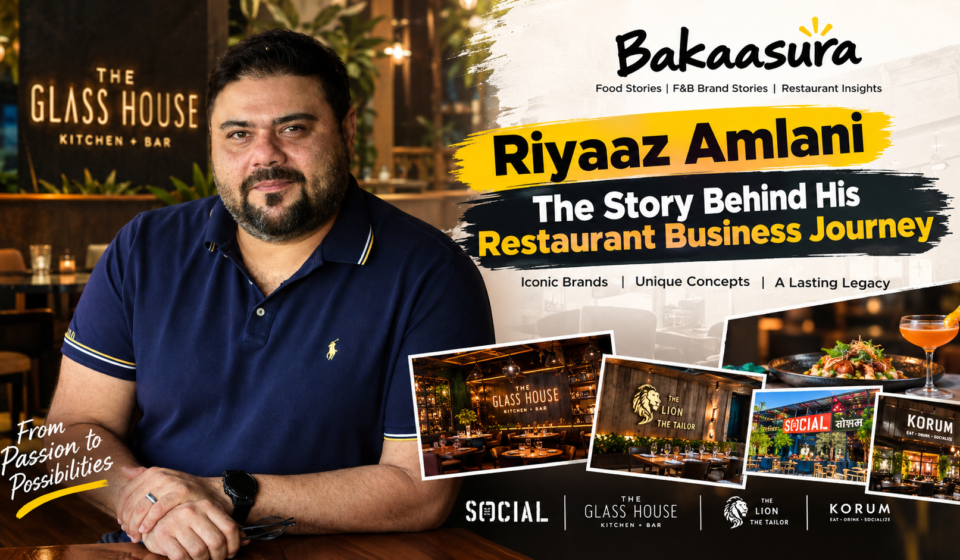

Riyaaz Amlani is one of the prominent names associated with the evolution of India’s modern café, restaurant and nightlife industry. His career is closely linked with the idea that restaurants and cafés should offer more than food and beverages. They can become places where people work, meet friends, socialise, discover new experiences and spend extended periods of time.
Amlani entered the hospitality business at a relatively young age and eventually built Impresario Entertainment & Hospitality, the company behind several recognisable Indian food and lifestyle brands. Café Mocha was among his early successes, while later concepts such as Smoke House Deli and Social helped establish his reputation as a restaurant entrepreneur who combined food with design, culture and community.
His approach was different from simply opening restaurants in multiple locations. Each concept was developed around a particular customer experience. Social, for example, blurred the boundaries between a café, bar, workspace and social destination, while Smoke House Deli built its identity around contemporary food and distinctive interiors.
Over the years, Amlani’s career has reflected the changing habits of India’s urban consumers. As customers increasingly began looking for places to work, meet, network and spend time, the restaurant became more than a place to eat.
Early Life and Entry Into Hospitality
Riyaaz Amlani was born in Mumbai and grew up in a family connected with business. His early exposure to entrepreneurship influenced his decision to enter the hospitality industry.
Unlike entrepreneurs who begin with a large restaurant group, Amlani’s journey developed through individual concepts and experiments.
He recognised an opportunity in India’s emerging café culture at a time when international-style coffee shops and casual dining formats were still developing.
This led to the creation of Café Mocha.
The Café Mocha Story
Café Mocha became one of the most important early milestones in Amlani’s career.
The concept was designed as a relaxed café where customers could spend time rather than simply order a quick beverage.
This was significant because India’s café culture was changing.
Young urban consumers increasingly wanted places where they could meet friends, hold informal conversations and spend an afternoon or evening away from home.
Café Mocha positioned itself within this emerging lifestyle.
More Than Coffee
The café was not built around coffee alone.
Food, beverages, interiors and atmosphere were combined to create a destination.
This approach became an important part of Amlani’s later restaurant philosophy.
Instead of asking only what customers wanted to eat, he also considered:
- Why customers were visiting
- How long they wanted to stay
- What kind of atmosphere they wanted
- Whether the space could encourage social interaction
- How design could influence the experience
These questions eventually became central to the development of Impresario’s later brands.
Building Impresario Entertainment & Hospitality
Amlani eventually developed Impresario Entertainment & Hospitality into a multi-brand restaurant and hospitality company.
The company’s portfolio expanded beyond cafés into restaurants, bars, nightlife and hybrid social spaces.
Rather than creating one standardised restaurant format, Amlani and his team developed different concepts for different audiences.
This multi-brand strategy allowed Impresario to operate across several parts of India’s organised food and beverage industry.
Its best-known concepts have included:
- Café Mocha
- Smoke House Deli
- Social
- Salt Water Café
- Prithvi Café
- Mocha Mojo
- Some Place Else
- Other food, beverage and entertainment concepts
The portfolio changed over time as the company introduced new formats and adapted existing businesses.
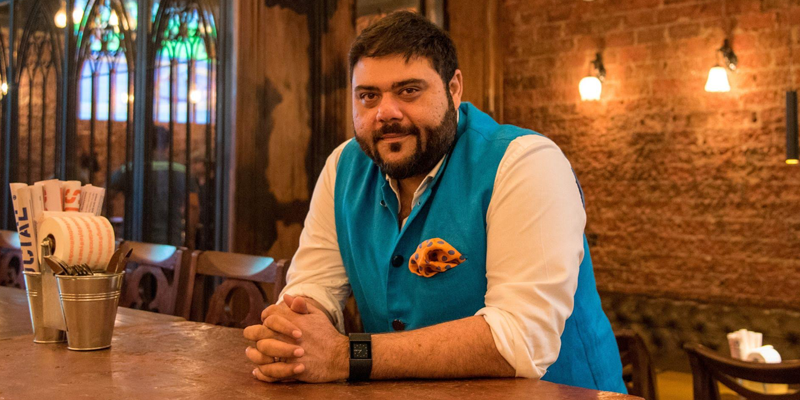
Smoke House Deli: Combining Food and Design
Smoke House Deli became another important chapter in Amlani’s restaurant journey.
The brand developed a contemporary casual-dining identity, combining food with a highly recognisable visual environment.
Its interiors became part of the brand.
This was consistent with Amlani’s broader belief that customers do not experience a restaurant through food alone.
Lighting, furniture, artwork, music, service and architecture all contribute to the overall experience.
Smoke House Deli therefore became an example of how design could be integrated into restaurant branding.
Creating a Distinct Identity
The restaurant’s visual language helped distinguish it from conventional cafés and restaurants.
The concept was modern, urban and strongly design-led.
This approach became increasingly relevant as Indian restaurant customers became more familiar with international dining trends.
Restaurants were no longer competing only on menu and price.
They were also competing on atmosphere and identity.
Read this – India’s top restaurant founders and restaurateurs
Social: The Concept That Changed the Café Model
Among Amlani’s most recognised concepts is Social.
The first Social opened in Hauz Khas Village, Delhi, in 2014.
The concept attempted to combine several different uses within one location.
It could function as:
- A café
- A restaurant
- A bar
- A workspace
- A meeting place
- A nightlife destination
- A community space
This hybrid model became one of the most distinctive elements of Social.
The Rise of the Work-and-Social Space
When Social was introduced, India’s startup and freelance communities were growing rapidly.
More professionals were looking for informal places where they could work outside traditional offices.
Social responded to this change by combining food and beverages with a work-friendly environment.
The concept included communal tables, charging points, Wi-Fi and spaces that could accommodate both individual work and social interaction.
This helped position Social differently from a conventional restaurant.
Social and India’s Changing Urban Culture
Social’s success reflected a broader transformation in urban India.
Young consumers were spending more time outside traditional workplaces.
Cafés became places for meetings.
Restaurants became networking spaces.
Bars became entertainment destinations.
And co-working spaces began overlapping with hospitality.
Social operated within this intersection.
The concept did not necessarily ask customers to choose between work and leisure.
It attempted to provide an environment for both.
The Importance of Community
Community became an important element in Amlani’s approach.
Instead of building restaurants purely around food categories, his concepts were often designed around lifestyles.
That meant understanding the customer beyond their dining preference.
A person might visit Social for breakfast, work there in the afternoon, meet friends in the evening and stay for drinks at night.
The restaurant could therefore become part of the customer’s daily routine.
This was different from the traditional restaurant model, where customers usually arrived specifically for a meal.
Expansion Across Indian Cities
Impresario gradually expanded its restaurant concepts into several major Indian markets.
The company developed a presence across cities including Mumbai, Delhi, Bengaluru, Pune, Hyderabad, Chennai and other urban markets through different brands and formats.
Expansion, however, was not simply about opening identical outlets.
Different concepts were matched with different neighbourhoods and consumer demographics.
For Amlani, location was an important part of the customer experience.
A restaurant in a business district could serve a different purpose from one located in a nightlife destination or shopping area.
Understanding the Indian Customer
One of Amlani’s key business strengths has been adapting global hospitality ideas to Indian consumers.
The objective was not necessarily to copy an international restaurant format.
Instead, the idea was to understand why the format worked elsewhere and determine how it could be adapted for Indian customers.
This approach helped Impresario create concepts that were international in influence but Indian in execution.
Food menus could be adapted to local tastes while interiors and service could reflect global design trends.
Challenges in the Restaurant Business
Amlani’s career has also demonstrated that restaurant entrepreneurship involves significant risks.
The hospitality industry operates under challenging conditions involving:
- High real-estate costs
- Employee turnover
- Food inflation
- Licensing requirements
- Changing consumer preferences
- Seasonal demand
- Competition
- Rising delivery and technology expectations
A restaurant can have a strong brand and still face financial pressure if its location, rental structure or operating model is not sustainable.
Amlani has therefore emphasised the importance of constantly evaluating restaurant formats and consumer behaviour.
Read this – Best Fine Dining Restaurants in Indiranagar
The Impact of COVID-19
The COVID-19 pandemic created one of the most difficult periods for India’s hospitality industry.
Restaurants and cafés faced prolonged restrictions, reduced customer traffic and severe disruption to dine-in operations.
For companies operating large restaurant portfolios, the challenge was particularly significant because fixed costs continued even when revenue declined.
The crisis accelerated several changes in the industry.
Restaurants increased their focus on:
- Delivery
- Takeaway
- Digital ordering
- Smaller formats
- Cost efficiency
- Technology
- Customer safety
Like other restaurant businesses, Impresario had to navigate this rapidly changing environment.
The pandemic demonstrated that even established restaurant brands need the ability to adapt quickly.
The Importance of Design in Amlani’s Businesses
Design has remained a recurring feature across Amlani’s restaurant concepts.
Smoke House Deli is perhaps the clearest example.
Social also developed a strong visual identity, using industrial elements, contemporary furniture and a deliberately informal atmosphere.
The objective was not simply to make restaurants attractive.
Design was used as part of the business model.
A distinctive interior could:
- Strengthen brand recognition
- Encourage customers to spend more time
- Create a social-media-friendly environment
- Differentiate one restaurant from competitors
- Support the overall concept
This approach became increasingly important as Instagram and other visual platforms changed how consumers discover restaurants.
Awards and Recognition
Riyaaz Amlani has received recognition from the Indian restaurant and hospitality industry throughout his career.
He has been recognised by organisations and industry publications for his contribution to India’s food and beverage sector.
His work with Impresario and its restaurant brands has also received recognition across restaurant, nightlife, design and hospitality award platforms.
Social and Smoke House Deli have appeared in various food and nightlife awards and industry listings over the years.
Amlani’s most significant recognition, however, has arguably been his sustained influence on India’s organised restaurant sector.
His work helped demonstrate that a restaurant could be developed as a lifestyle brand rather than simply a dining outlet.
Riyaaz Amlani’s Business Philosophy
Amlani’s entrepreneurial approach can be understood through several principles.
1. Build Around a Consumer Need
Instead of beginning with a menu, understand what customers want from the space.
2. Create a Strong Concept
Every restaurant should have a clear reason for existing.
3. Make the Space Part of the Product
Interior design, architecture and atmosphere should support the restaurant’s identity.
4. Adapt Global Trends for India
International ideas can provide inspiration, but the final concept must make sense for Indian customers.
5. Think Beyond Food
Restaurants can become workplaces, meeting spaces, entertainment destinations and community hubs.
6. Keep Experimenting
Consumer preferences change, which means hospitality companies must continuously test new ideas.
Why Social Became an Important Restaurant Concept
The significance of Social extends beyond the brand itself.
It represented a change in how restaurants could be used.
The restaurant was no longer necessarily a place people visited for a single meal.
Instead, customers could spend several hours there.
They could work, eat, meet people, attend events and socialise.
This helped anticipate the convergence between hospitality, coworking and lifestyle businesses.
Riyaaz Amlani’s Contribution to India’s Café Culture
Amlani’s career coincided with the rapid growth of India’s urban café culture.
During the 2000s and 2010s, Indian cities saw increasing demand for:
- Coffee shops
- Casual restaurants
- Designer cafés
- Cocktail bars
- Work-friendly spaces
- Experiential dining
- Nightlife venues
Amlani’s brands participated in this transformation.
Rather than treating these trends separately, he combined several of them within individual concepts.
Read this – Who Is Amit Burman? Founder Story, Career and Business Journey
Major Milestones in Riyaaz Amlani’s Career
- Entered the hospitality industry as a young entrepreneur.
- Built Café Mocha into a recognised café brand.
- Founded and developed Impresario Entertainment & Hospitality.
- Expanded into casual dining and lifestyle restaurants.
- Developed Smoke House Deli as a design-led dining concept.
- Launched Social in 2014.
- Developed Social as a combination of restaurant, bar, workspace and community venue.
- Expanded Impresario’s concepts into multiple Indian cities.
- Experimented with different restaurant and entertainment formats.
- Navigated the challenges created by India’s changing restaurant regulations and operating environment.
- Managed the major disruption caused by the COVID-19 pandemic.
- Continued developing experience-driven hospitality concepts.
Achievements at a Glance
Riyaaz Amlani’s most important achievement has been creating restaurant concepts that were designed around how people wanted to spend their time, rather than simply what they wanted to eat.
Café Mocha helped establish his reputation in India’s café market.
Smoke House Deli demonstrated the commercial potential of design-led casual dining.
Social went a step further by combining hospitality, work and community.
Together, these concepts helped establish Impresario as one of India’s notable independent restaurant companies.
What Entrepreneurs Can Learn From Riyaaz Amlani
Amlani’s career provides several lessons for food entrepreneurs.
The first is that a restaurant needs a clear identity.
The second is that customer behaviour should influence the concept.
The third is that design can become part of the product.
The fourth is that restaurants can serve multiple purposes.
And finally, experimentation is essential in a rapidly changing hospitality market.
The success of Social particularly demonstrates how identifying a change in consumer behaviour can create an entirely new restaurant category.
Conclusion
Riyaaz Amlani’s journey is an example of how India’s restaurant industry evolved from traditional dining toward experience-led hospitality.
From Café Mocha to Smoke House Deli and Social, his businesses have consistently explored the relationship between food, design, culture and community.
His most distinctive contribution has been the idea that restaurants can become much more than places to eat.
They can be offices, meeting rooms, social clubs, entertainment destinations and cultural spaces.
Social became perhaps the clearest expression of this philosophy, bringing together food, drinks, work and social interaction under one roof.
The journey has also included the challenges that come with operating a large hospitality business, including high costs, changing consumer expectations, regulatory complexity and the disruption caused by COVID-19.
Yet the underlying philosophy has remained consistent: understand the customer, create a strong concept and make the experience itself part of the product.
For India’s modern restaurant industry, Riyaaz Amlani’s career provides an important example of how a food business can evolve into a broader lifestyle and hospitality brand.