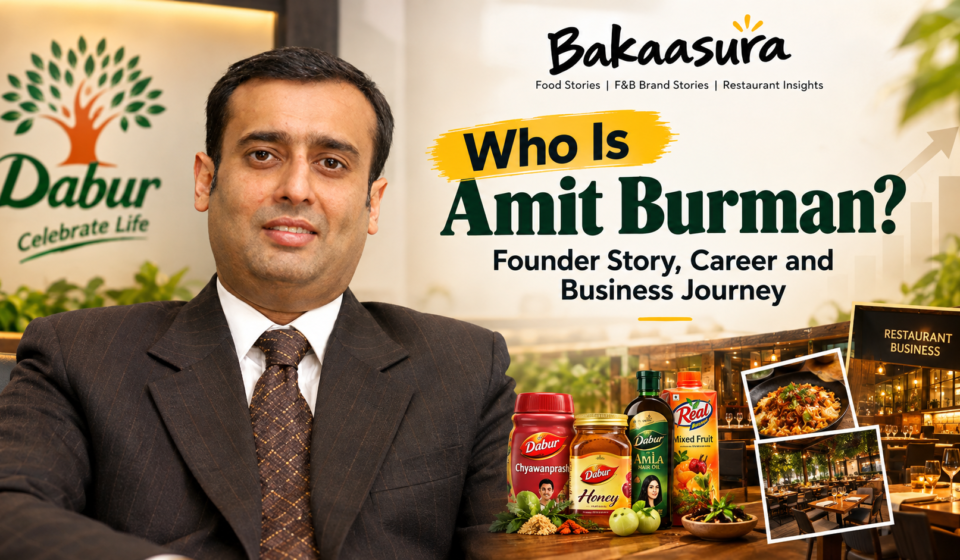

Amit Burman’s entrepreneurial journey is closely connected to two very different sides of India’s food industry. On one side was Dabur, the century-old family business in which he helped create a major packaged-foods business. On the other was Lite Bite Foods, the restaurant company through which he moved from packaged consumer products into organised food retail and hospitality.
Born into the Burman family, the promoters of Dabur, Amit Burman did not simply inherit a ready-made career. He developed his business experience through engineering, manufacturing and strategy roles before taking responsibility for Dabur’s food business. His work was particularly associated with the launch and development of Real fruit juices and Hommade, helping Dabur establish a stronger position in processed foods.
After Dabur Foods was merged with Dabur India in 2007, Burman moved into a larger leadership role at the parent company. He eventually became Vice Chairman and later Chairman of Dabur India in 2019.
His entrepreneurial ambitions, however, extended beyond FMCG. Through Lite Bite Foods, he helped build a diversified restaurant portfolio spanning North Indian, South Indian, Asian, Mediterranean, bakery and quick-service formats. Punjab Grill became the company’s flagship brand, while Zambar, Asia Seven, YouMee, Fresc Co, The Artful Baker and other concepts expanded the group’s presence across different consumer segments.
The story of Amit Burman is therefore not simply one of inherited wealth. It is a story of taking experience from a family enterprise, identifying emerging consumer opportunities and building businesses around changing Indian eating habits.
From a Business Family to an Independent Career
Amit Burman was born in 1969 and grew up in Delhi in the Burman family, which had built Dabur into one of India’s prominent consumer businesses.
Although his family background gave him access to an established business environment, Burman pursued formal technical and management education. He earned a Bachelor of Science degree in Industrial Engineering from Lehigh University, a Master of Science in Industrial Engineering from Columbia University and an MBA from the University of Cambridge.
Before taking a major role in the family business, he also gained professional exposure in the United States. At Colgate-Palmolive in New York, he worked in manufacturing strategy and was involved in analysing factory and warehouse locations. He also trained at Tishcon Corporation in New York.
These experiences exposed him to manufacturing systems, operational efficiency, inventory management and corporate strategy.
Read this – India’s top restaurant founders and restaurateurs
Starting at Dabur from the Ground Up
Burman began his career at Dabur’s Industrial Engineering Department. Rather than immediately entering the top management structure, he worked on practical operational issues, including machinery induction, manufacturing methods, manpower efficiency and packaging improvements.
The experience gave him an understanding of how a large consumer company actually functioned.
According to Burman’s own accounts, initially working across different divisions helped him understand the organisation before he decided to concentrate on a specific growth opportunity.
That opportunity turned out to be processed foods.
The Real Story: How Amit Burman Helped Build Dabur’s Food Business
One of Amit Burman’s most significant business achievements was his role in Dabur’s entry into processed foods.
Dabur established Dabur Foods and appointed Burman as its CEO in 1999. The business focused on products including packaged fruit juices, cooking pastes and chutneys.
The company’s most recognised success became Real fruit juice.
The Indian packaged-fruit-juice category was still developing when Real was launched. Burman’s strategy was to build a consumer product around convenience and fruit-based nutrition while creating a distribution-led packaged-food business.
Dabur’s own corporate history credits Burman with spearheading the company’s processed-foods foray, while the company identifies Real and Hommade among the brands associated with his leadership.
Real Became a Major Milestone
Real eventually became one of Dabur’s most recognised consumer brands.
The significance of the Real business went beyond a single product. It demonstrated that a traditional Indian FMCG company could create a large-scale packaged-food category and build a modern consumer brand around it.
Burman’s experience with Real also became important later when he entered restaurant retail. Packaged foods required understanding consumers, distribution and brand positioning; restaurants required understanding locations, formats, cuisines and customer experiences.
The industries were different, but the underlying business principle was similar: identify a consumer need and create a scalable proposition around it.
The 2007 Turning Point at Dabur
In July 2007, Dabur Foods was merged into Dabur India.
After the merger, Amit Burman became Vice Chairman of Dabur India. He subsequently remained involved with the wider business and played a role in identifying new growth opportunities.
His career at Dabur reached another major milestone in July 2019, when he was appointed Chairman of Dabur India.
He served as Chairman until August 2022, after which he stepped down from the chairmanship while continuing his association with the Burman family’s business interests.
This period represented an important transition in his career: from building a new business within the family company to developing an independent food and restaurant platform.
The Birth and Growth of Lite Bite Foods
Amit Burman’s passion for food eventually led him toward organised restaurant retail.
There is a minor difference in published timelines. Entrepreneur India and several older profiles describe Lite Bite Foods as beginning in 2001 with a Subway franchise, while the company’s current website says it started its journey in 2002.
Regardless of the precise year, the early business model was very different from the restaurant portfolio Lite Bite Foods operates today.
The company initially entered food retail through franchise operations before moving toward its own restaurant concepts.
This became the foundation for a much broader food business.
Read this – Lite Bite Foods: The Journey of Building a Multi-Brand Food Empire
From Subway to Multiple Restaurant Brands
Lite Bite Foods gradually moved beyond the franchise model and began developing concepts aimed at specific cuisines and consumer segments.
The company’s portfolio came to include brands such as:
- Punjab Grill
- Zambar
- Asia Seven
- Fresc Co
- YouMee
- The Artful Baker
- Street Foods by Punjab Grill
- Tres
- Hahn’s Kitchen
- Other food and beverage concepts
The strategy was not to build one restaurant format and replicate it everywhere. Instead, Lite Bite developed multiple brands for different cuisines, price points, locations and customer occasions.
This approach helped the company operate restaurants in shopping malls, airports, high streets, hotels, multiplexes and commercial destinations.
Punjab Grill: The Flagship Success
Punjab Grill became the most prominent brand associated with Lite Bite Foods.
The restaurant brand was launched in 2008 by Amit Burman and Rohit Aggarwal and focused on North Indian cuisine inspired by the culinary traditions of undivided Punjab.
The concept combined traditional flavours with a contemporary restaurant environment.
Over time, Punjab Grill expanded beyond India, with outlets in international markets including Abu Dhabi, Dubai, Bangkok and Singapore.
The brand’s expansion illustrated a broader ambition: Indian cuisine could be positioned not merely as regional food but as a premium dining experience capable of travelling across international markets.
Building a Multi-Cuisine Restaurant Portfolio
Punjab Grill was only one part of Burman’s restaurant strategy.
Zambar focused on South Indian and coastal flavours, while Asia Seven developed an Asian-focused dining proposition. Other concepts explored Mediterranean cuisine, bakeries, Japanese and Korean-inspired food, street food and casual dining.
This multi-brand strategy became one of Lite Bite Foods’ defining characteristics.
Instead of asking customers to adapt to one restaurant identity, the company created separate brands for different dining preferences.
That allowed it to experiment with cuisines and formats while using a broader organisational infrastructure behind the brands.
Expansion Across India and Overseas Markets
Lite Bite Foods gradually expanded its operations across major Indian cities, including Delhi NCR, Mumbai, Pune, Bengaluru, Chennai, Kochi and other markets.
The company also established an international presence.
Its current corporate profile says Lite Bite Foods has more than 150 restaurants and operates across multiple Indian and overseas markets. The company’s current “About Us” page reports 19 owned and five managed brands, more than 160 outlets and operations across 20 Indian cities, although company profiles can change as brands and outlets are added or closed.
This growth reflects the transformation of Lite Bite from an early franchise-led venture into a diversified food and beverage company.
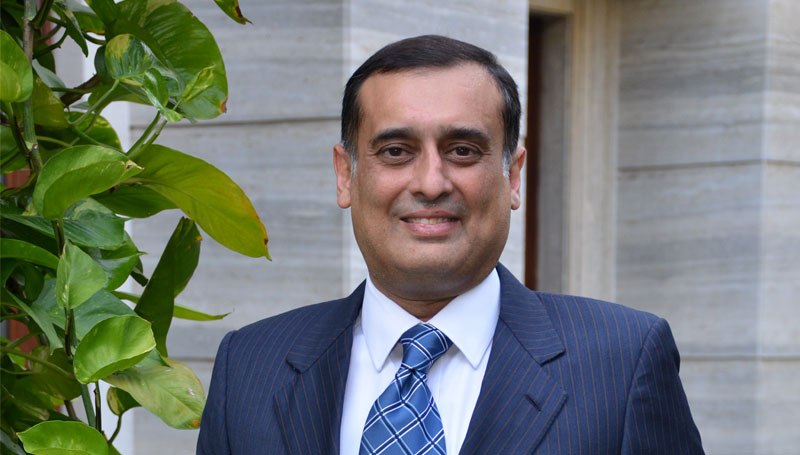
Amit Burman’s Business Philosophy
One of the most interesting aspects of Burman’s career is the movement from FMCG to restaurants.
The two businesses require very different operating models.
A packaged-food company depends heavily on manufacturing, distribution, branding and retail availability. A restaurant company depends on location, food quality, service, real estate, staff, supply chains and customer experience.
Burman’s career shows how experience in one food-related sector can provide a foundation for another.
His approach also demonstrates the importance of segmentation. Instead of attempting to make one restaurant brand serve every customer, Lite Bite developed different concepts for different markets.
Challenges, Setbacks and the Other Side of the Story
A founder story is incomplete without discussing setbacks.
Burman’s career has not been a straight line of successful launches. Earlier in his entrepreneurial journey, he was involved in ventures that did not perform as expected.
Business Standard reported that an Audi dealership venture in North India failed to take off. Burman acknowledged that mistakes had been made and that the important issue was correcting them.
The restaurant business itself has also been described by Burman as extremely demanding. Restaurants face high operating costs, location risks, staffing challenges, changing consumer preferences and intense competition.
Therefore, the evolution of Lite Bite Foods should not be presented as uninterrupted expansion.
The 2026 Strategic Turning Point
In July 2026, Moneycontrol reported that the Burman family was exploring a possible sale of a majority stake in Lite Bite Foods, with Investec advising on the potential transaction.
This should not automatically be described as a “downfall” or business failure.
A potential stake sale can be part of a strategic capital decision, ownership restructuring or value-unlocking exercise. Moneycontrol reported that the promoters were exploring the transaction and that a new investor could potentially help scale the company further.
As of the available reporting, this was an exploration of a transaction rather than evidence that Lite Bite Foods had collapsed.
The distinction is important when examining an entrepreneur’s career objectively.
Awards and Recognition
The businesses associated with Amit Burman and Lite Bite Foods have received numerous industry recognitions.
Burman himself received the Restaurateur of the Year recognition at the India Restaurant Awards in 2011, according to contemporary reporting.
The company’s brands have subsequently received recognition from several food and hospitality awards.
Punjab Grill, Zambar and YouMee have received Times Food & Nightlife Awards in different years and categories. Lite Bite Foods’ awards history also lists recognitions involving the Michelin Guide, Food Food Awards, The Week Culinary Golden Plate Awards and other industry programmes.
In 2025, Punjab Grill was recognised as Restaurant Chain of the Year – National at the Economic Times Hospitality World Awards, according to Lite Bite Foods.
In 2026, Lite Bite Foods also reported Big F Awards recognition for YouMee and Hahn’s Kitchen.
These awards generally belong to the restaurant brands rather than being individual awards personally received by Burman, so they should be understood as recognition of the wider teams, brands and operating organisation.
Amit Burman’s Leadership at Dabur
His restaurant career should not overshadow his contribution to Dabur.
His most important corporate achievement remains his role in creating and developing Dabur’s processed-food business.
Real and Hommade became significant consumer brands, while Dabur’s move into processed foods expanded the company’s business beyond its traditional categories.
His appointment as Chairman of Dabur India in 2019 was another important milestone, reflecting the level of responsibility he had reached within the family enterprise.
He stepped down as Chairman in August 2022 after more than three decades of association with the company’s business environment.
What Made His Journey Different?
Amit Burman’s career can be viewed through three major transitions.
First came industrial and operational experience. He learned manufacturing and business systems before taking responsibility for a major business.
Second came category creation and brand building. Through Dabur Foods and Real, he participated in building a large packaged-food business.
Third came food entrepreneurship. Through Lite Bite Foods, he moved from packaged food into restaurants and created a portfolio of specialised brands.
The common thread was food.
But the business models changed dramatically.
Read this – First Fiddle Restaurants Journey: The Story Behind a Multi-Brand F&B Business
Major Milestones in Amit Burman’s Career
- Born in 1969 into the Burman family associated with Dabur.
- Studied Industrial Engineering at Lehigh University.
- Earned an M.Sc. in Industrial Engineering from Columbia University.
- Earned an MBA from the University of Cambridge.
- Gained professional experience at Colgate-Palmolive in New York.
- Worked in Dabur’s Industrial Engineering Department.
- Became CEO of Dabur Foods in 1999.
- Helped lead Dabur’s processed-foods expansion.
- Became closely associated with Real fruit juices and Hommade.
- Dabur Foods merged with Dabur India in 2007.
- Became Vice Chairman of Dabur India.
- Built Lite Bite Foods into a diversified restaurant business.
- Co-founded the Punjab Grill business with Rohit Aggarwal.
- Became Chairman of Dabur India in 2019.
- Stepped down as Dabur Chairman in 2022.
- Continued as Chairman of Lite Bite Foods.
- Lite Bite expanded into multiple Indian and international markets.
- Restaurant brands associated with the group received multiple industry awards.
- In 2026, the Burman family was reported to be exploring a potential majority-stake sale in Lite Bite Foods.
Achievements at a Glance
Amit Burman’s achievements extend across both consumer goods and hospitality.
In FMCG, his most notable contribution was helping Dabur enter and build a meaningful processed-food business, particularly through Real and Hommade.
In hospitality, his major achievement was helping transform Lite Bite Foods from an early franchise-based operation into a multi-brand restaurant platform.
Punjab Grill became the company’s flagship brand and expanded internationally, while other brands enabled Lite Bite to compete across multiple cuisines and dining formats.
His career also demonstrates the value of transferring knowledge between industries. Distribution, consumer behaviour, branding and market segmentation learned in FMCG became useful foundations for restaurant entrepreneurship.
Conclusion
Amit Burman’s story is ultimately a story of reinvention within the food business.
He began with engineering and operational experience, moved into Dabur’s processed-foods division and became one of the key figures behind the company’s packaged-food expansion. His association with Real and Hommade gave him experience in building consumer categories at scale.
He later took that knowledge into organised food retail through Lite Bite Foods. What started around the franchise restaurant model evolved into a diversified portfolio of Indian and international food concepts, with Punjab Grill emerging as the flagship.
There have been setbacks, including ventures that did not work as planned, and the restaurant industry itself has presented the operational challenges common to a capital-intensive and highly competitive sector. The 2026 exploration of a potential majority stake sale in Lite Bite Foods represents another strategic chapter rather than, on the evidence available, proof of business failure.
From Dabur Foods to Lite Bite Foods, Burman’s journey illustrates how experience from a large family enterprise can be converted into independent entrepreneurial ventures. His career combines corporate leadership, category creation, restaurant expansion, brand building and continuous experimentation in the food industry.