
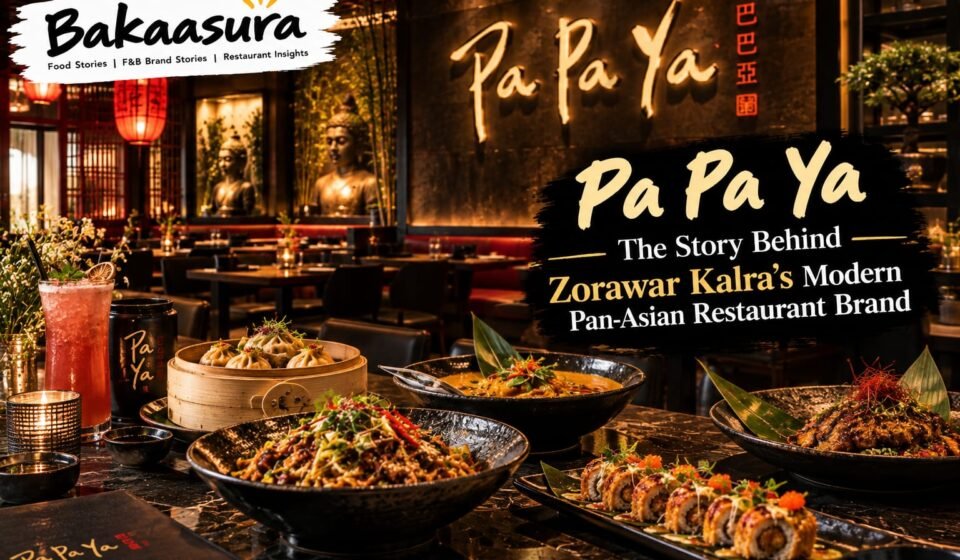

After building restaurant concepts around Indian cuisine, Zorawar Kalra took his restaurant portfolio in a different culinary direction with Pa Pa Ya. Launched in Mumbai in 2015, Pa Pa Ya was conceived as a modern Asian bistro and tapas bar, bringing together flavours and culinary influences from across Asia with contemporary techniques.
The concept became part of Massive Restaurants, the hospitality company founded by Zorawar Kalra in December 2012. Massive Restaurants describes Pa Pa Ya as its modern pan-Asian bistro concept, alongside brands such as Masala Library, Made in Punjab and Farzi Café.
Rather than treating Asian cuisine as a collection of separate national cuisines, Pa Pa Ya explored a broader modern interpretation, incorporating influences from Japan, China, Thailand, Vietnam, Malaysia, Indonesia, Korea and Singapore.
The Story Behind Pa Pa Ya
Pa Pa Ya represented an important change in direction for Zorawar Kalra.
Before the brand, his restaurant portfolio was strongly connected with Indian cuisine. Masala Library focused on progressive Indian fine dining, Made in Punjab celebrated Punjabi cuisine, and Farzi Café developed a modern Indian bistro format.
With Pa Pa Ya, Kalra turned his attention toward Asia.
In 2015, The Economic Times reported that Pa Pa Ya was being developed as a modern Asian bistro and tapas bar using molecular gastronomy. Kalra said the concept was intended to bring greater innovation to Asian food in India and make contemporary Asian dining more accessible beyond five-star hotel restaurants.
The first outlet was planned for Palladium Mall in Mumbai’s Lower Parel area and opened in September 2015.
Zorawar Kalra and Massive Restaurants
Pa Pa Ya became another expression of the restaurant philosophy behind Massive Restaurants.
The company was established with the stated aim of developing restaurant brands across different market segments while showcasing the evolution of cuisine. Its portfolio eventually covered Indian fine dining, modern Indian restaurants, pan-Asian dining, bars and other hospitality concepts.
Pa Pa Ya added an international Asian dimension to that portfolio.
It also demonstrated that the company’s restaurant strategy was not limited to one cuisine. Instead, the group experimented with different culinary categories and dining formats.
From Indian Cuisine to Modern Asian Dining
The move into Asian cuisine was significant because it took Kalra beyond the culinary territory most closely associated with his family background.
According to YourStory, the development of Pa Pa Ya involved extensive food trials and tastings over approximately nine months. The concept brought together cooking techniques and culinary cultures from different parts of Asia, while using molecular gastronomy selectively.
The objective was not simply to make Asian food more elaborate.
Instead, modern techniques were intended to contribute to flavour, texture and presentation without replacing the identity of the underlying cuisine.
A Pan-Asian Culinary Philosophy
Pa Pa Ya’s menu drew inspiration from a wide range of Asian culinary traditions.
Coverage of the BKC outlet described influences from Thailand, Myanmar, Vietnam, China, Japan, Malaysia, Korea, Indonesia and Singapore, among others.
This broad approach helped establish Pa Pa Ya as a pan-Asian restaurant rather than a concept focused on one particular country’s cuisine.
The menu could move between sushi, dim sum, laksa, pho, Som Tam, Penang curry and Mapo tofu, allowing diners to experience different Asian culinary traditions within the same restaurant.
Molecular Gastronomy and Modern Techniques
One of the most recognisable elements of Pa Pa Ya was its use of modern culinary techniques.
Molecular gastronomy became part of the restaurant’s identity, particularly in its early years. However, Zorawar Kalra explained that the technique was intended to be used where it added value rather than simply for spectacle.
This philosophy shaped the restaurant’s approach to food presentation.
Traditional Asian dishes could therefore appear in unfamiliar formats, with changes to texture, plating and serving style while retaining recognisable flavours.
Theatrical Presentation
Presentation played an important role in Pa Pa Ya’s identity.
When the first Mumbai restaurant opened, Vogue India highlighted dishes presented in unconventional ways, including sushi arranged in a three-dimensional format and other dishes designed to create a visual element at the table.
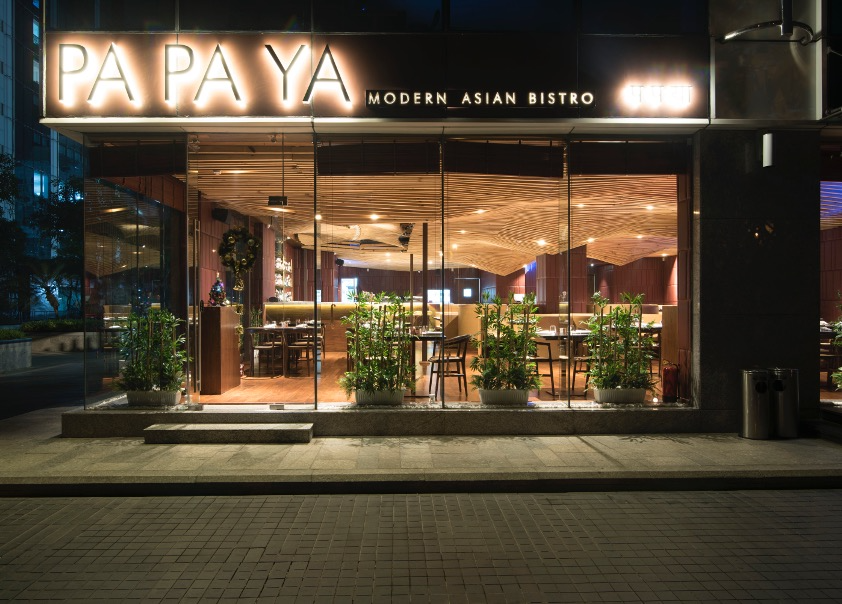
The restaurant’s interiors followed a similarly contemporary approach.
At its BKC Mumbai location, Architectural Digest described a high-energy pan-Asian dining environment with a kinetic ceiling feature above the bar and a contemporary-retro Asian design.
The result was a restaurant where food, cocktails, interiors and presentation were all part of the overall experience.
The Asian Tapas Concept
Pa Pa Ya also explored the tapas format within Asian dining.
Instead of restricting the meal to traditional starter-main-course structures, smaller plates allowed diners to sample different cuisines, flavours and techniques.
This format suited the restaurant’s pan-Asian philosophy because a single table could experience dishes influenced by several different parts of Asia.
It also encouraged a more social style of dining, where multiple plates could be shared among guests.
Read this – Olive Bar & Kitchen – From Restaurant Concept to an Iconic Indian Dining Brand
Food Beyond Borders
Pa Pa Ya’s culinary identity was built around the idea that Asian cuisine could be interpreted across borders.
Rather than presenting Japanese, Thai, Chinese or Vietnamese food as completely separate experiences, the restaurant brought different traditions together under one modern restaurant concept.
This approach reflected the growing interest in pan-Asian dining in India’s metropolitan restaurant scene.
For Zorawar Kalra, it also provided an opportunity to apply the experimentation associated with his earlier restaurant concepts to a new culinary category.
Innovation Without Losing Flavour
A key part of Pa Pa Ya’s concept was the balance between innovation and recognisable flavour.
According to YourStory, Kalra said molecular gastronomy was used only when it could add value without taking away from the food’s flavour profile.
That distinction is important to understanding the brand.
The restaurant’s objective was not innovation for its own sake. Instead, modern techniques were incorporated into dishes to create new textures, visual experiences and presentations while maintaining the character of Asian cuisine.
The Dining Experience
Pa Pa Ya was designed as more than a conventional Asian restaurant.
The brand combined food with contemporary interiors, cocktails, presentation and a high-energy atmosphere. Architectural Digest’s coverage of the BKC outlet highlighted the restaurant’s combination of pan-Asian food, molecular gastronomy, mixology and design.
The beverage programme also reflected the broader concept.
Cocktails incorporated Asian ingredients and flavours such as lemongrass, Thai galangal and chamomile, while molecular mixology techniques added another layer to the experience.
Read this – Out of the Box and Lord of the Drinks – The Restaurant Brands Built by Priyank Sukhija
Pa Pa Ya’s Place in Zorawar Kalra’s Restaurant Journey
Pa Pa Ya became an important part of Zorawar Kalra’s broader restaurant portfolio.
It demonstrated his willingness to move between culinary categories while maintaining a consistent focus on modern dining experiences.
Masala Library represented progressive Indian fine dining. Made in Punjab focused on Punjabi cuisine. Farzi Café brought modern Indian food into a more casual bistro environment.
Pa Pa Ya extended this progression into pan-Asian cuisine.
The brand therefore became another example of how Kalra used different cuisines and formats to build distinct restaurant identities under Massive Restaurants.
The Evolution of the Brand
Pa Pa Ya’s expansion included multiple outlets, including locations in Mumbai. Architectural Digest described the BKC location as the group’s third Pa Pa Ya outlet in Mumbai in 2018.
The concept has continued to be associated with modern Asian dining, contemporary presentation and innovative techniques.
Current listings also describe Pa Pa Ya as a modern Asian restaurant offering pan-Asian cuisine with molecular-gastronomy influences.
What Pa Pa Ya Represents
The story of Pa Pa Ya is ultimately about expanding the possibilities of Asian dining in India.
Its concept combined several ideas: pan-Asian cuisine, smaller plates, modern culinary techniques, creative presentation, mixology and contemporary restaurant design.
For Zorawar Kalra, the brand also represented a move beyond the Indian cuisine concepts that had established his restaurant portfolio.
Pa Pa Ya showed how a restaurateur could build a distinct identity around a different cuisine while maintaining the broader philosophy of experimentation and contemporary hospitality.
Read this – Asia Seven Restaurant – The Story, Concept and Cuisine Behind the Brand
Key Points
- Pa Pa Ya was launched in Mumbai in 2015.
- The concept was created by restaurateur Zorawar Kalra.
- It became part of the Massive Restaurants portfolio.
- The restaurant was conceived as a modern Asian bistro and tapas bar.
- Its menu draws from multiple Asian culinary traditions.
- Molecular gastronomy became an important part of the brand’s culinary approach.
- The concept combines food, cocktails, contemporary interiors and theatrical presentation.
- Its menu has included dishes such as sushi, dim sum, laksa, pho, Som Tam, Penang curry and Mapo tofu.
- Pa Pa Ya expanded Zorawar Kalra’s restaurant portfolio beyond Indian cuisine.
Conclusion
Pa Pa Ya represents a different chapter in Zorawar Kalra’s restaurant journey. After establishing concepts focused on Indian cuisine, he turned toward Asia and created a restaurant built around pan-Asian flavours, modern culinary techniques and an energetic dining environment.
Its use of molecular gastronomy, creative plating and Asian-inspired mixology helped establish a distinctive identity. At the same time, the brand remained rooted in recognisable Asian flavours and culinary traditions.
As part of the Massive Restaurants portfolio, Pa Pa Ya demonstrates how Zorawar Kalra’s restaurant business evolved across cuisines and formats. The brand’s story is ultimately about taking the diverse food traditions of Asia and presenting them through a contemporary Indian restaurant lens.