
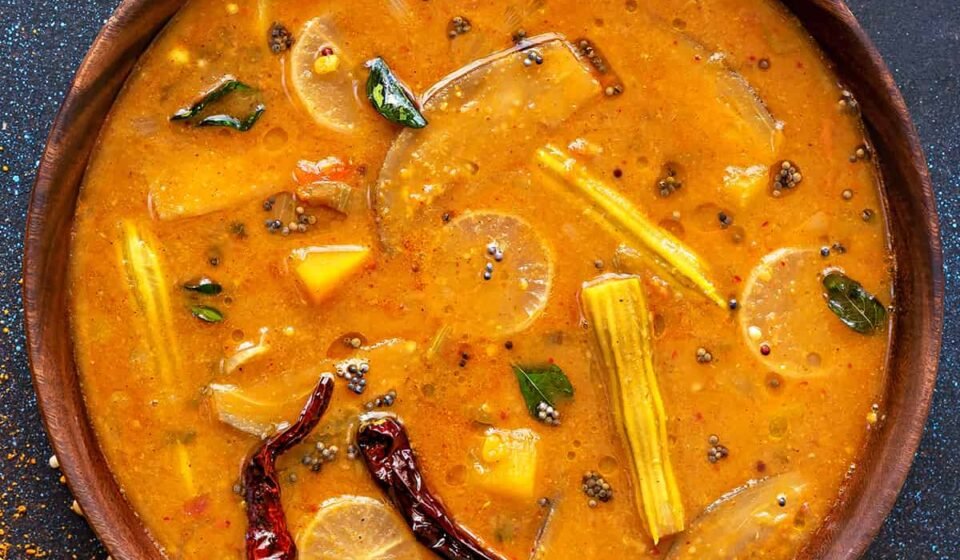

Sambar is a classic South Indian lentil and vegetable stew made with toor dal, vegetables, tamarind, spices and a flavorful sambar masala. It is an essential accompaniment for idli, dosa, vada, rice and South Indian breakfast dishes.
A good homemade sambar balances spicy, tangy and slightly sweet flavours. The vegetables add texture, while cooked dal gives the dish its hearty consistency. This easy sambar recipe is perfect for everyday meals and can be adjusted according to the vegetables available in your kitchen.
Sambar Recipe at a Glance
Preparation Time: 15 minutes
Cooking Time: 30–40 minutes
Servings: 4–5
Cuisine: South Indian
Course: Side Dish
Type: Vegetarian
Ingredients for Sambar
- 1 cup toor dal
- 1 medium onion, chopped
- 1 tomato, chopped
- 1 carrot, chopped
- 1 small potato, chopped
- ½ cup drumstick pieces, optional
- ½ cup pumpkin or bottle gourd, optional
- 2–3 green chillies
- 1 teaspoon turmeric powder
- 1–2 tablespoons sambar powder
- 1 small lemon-sized ball of tamarind
- 1–2 teaspoons jaggery, optional
- Salt to taste
- 2 tablespoons coriander leaves
- Water as required
For Tempering
- 1–2 tablespoons oil or ghee
- 1 teaspoon mustard seeds
- ½ teaspoon cumin seeds
- 1–2 dried red chillies
- 8–10 curry leaves
- A pinch of asafoetida
Read this – Homemade Masala Dosa Recipe – Easy South Indian Breakfast
How to Make Sambar
Step 1: Cook the Toor Dal
Wash the toor dal thoroughly and add it to a pressure cooker with turmeric and enough water.
Pressure cook until the dal becomes completely soft and mushy. Once the pressure releases naturally, mash the dal until smooth.
Set it aside.
Step 2: Prepare the Tamarind
Soak the tamarind in warm water for around 10–15 minutes.
Squeeze and strain the mixture to extract the tamarind water. Keep it aside.
For convenience, tamarind paste can also be used.
Step 3: Cook the Vegetables
Add chopped onion, tomato, carrot, potato, drumstick and other vegetables to a large pot.
Add green chillies, turmeric, salt and enough water.
Cook over medium heat until the vegetables become tender but do not turn completely mushy.
Step 4: Add Sambar Powder
Add the sambar powder and mix well.
Cook for a few minutes so the spices blend with the vegetables.
The amount of sambar powder can be adjusted according to your preferred level of spice.
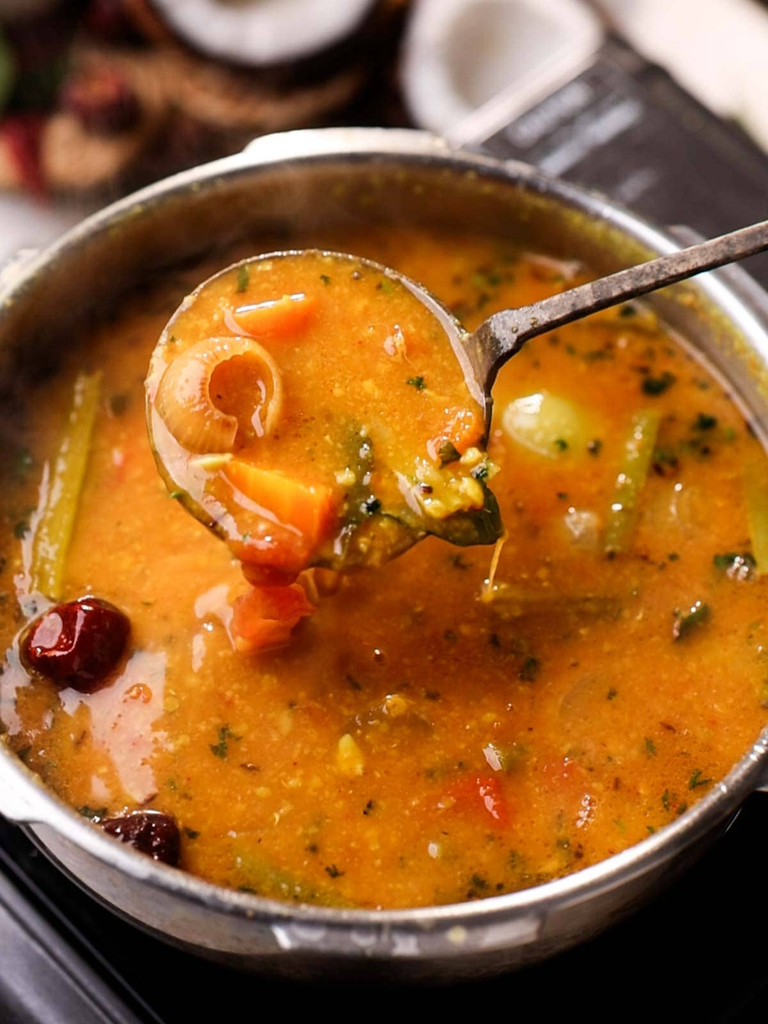
Read this – Famous Thali in Bangalore – Best Places to Eat
Step 5: Add Tamarind Water
Pour the prepared tamarind water into the vegetable mixture.
Mix well and simmer for around 5–8 minutes.
This allows the raw tanginess of the tamarind to mellow and gives the sambar its characteristic flavour.
Step 6: Add Cooked Dal
Add the mashed toor dal to the pot.
Mix everything thoroughly and add water if the sambar is too thick.
Allow it to simmer for another 5–10 minutes on low to medium heat.
Avoid boiling it excessively after adding the dal, as the texture can become too thick.
Step 7: Add Jaggery
Add a small amount of jaggery if desired.
Jaggery is optional, but a little sweetness can balance the sourness of tamarind and the heat from the spices.
Taste and adjust salt, tamarind and sambar powder as needed.
How to Prepare the Sambar Tempering
Heat oil or ghee in a small pan.
Add mustard seeds and allow them to splutter.
Add cumin seeds, dried red chillies, curry leaves and asafoetida.
Fry for a few seconds until aromatic, taking care not to burn the spices.
Pour the hot tempering over the prepared sambar and mix gently.
Finish with freshly chopped coriander leaves.
Best Vegetables for Sambar
One of the best things about sambar is that you can use different vegetables depending on the season and recipe.
Popular choices include:
- Drumstick
- Carrot
- Potato
- Pumpkin
- Brinjal
- Radish
- Bottle gourd
- French beans
- Pearl onions
- Tomatoes
Using a combination of vegetables gives the sambar more texture and depth of flavour.
Read this – How to Make Soft & Fluffy Idli at Home
How to Make Restaurant-Style Sambar
Use Fresh Sambar Powder
Fresh and aromatic sambar powder can make a noticeable difference. A good blend usually contains spices such as coriander, cumin, dried red chillies, fenugreek and other roasted spices.
Don’t Overcook the Vegetables
Vegetables should be tender while retaining some texture. Overcooked vegetables can make the sambar too mushy.
Balance Tamarind Carefully
Too much tamarind can make the sambar excessively sour. Add it gradually and adjust according to taste.
Let the Sambar Simmer
A short simmer after combining the dal, vegetables, spices and tamarind allows the flavours to blend properly.
Finish with Fresh Tempering
A freshly prepared tempering of mustard seeds, curry leaves and dried red chillies adds an important layer of aroma and flavour.
What to Serve with Sambar
Sambar can be served with many South Indian dishes:
- Idli
- Masala dosa
- Plain dosa
- Medu vada
- Pongal
- Uttapam
- Rice
- Lemon rice
- Tamarind rice
For a traditional breakfast, serve hot sambar with idli, dosa or vada and coconut chutney.
Popular Sambar Variations
Hotel-Style Sambar
Usually lighter and more aromatic, hotel-style sambar is commonly served with idli, vada and dosa.
Udupi Sambar
Udupi-style sambar is known for its distinctive combination of spices and often has a mild sweetness.
Vegetable Sambar
This version uses a variety of vegetables and works particularly well with rice.
Arachuvitta Sambar
A traditional Tamil-style preparation made using freshly ground spices and coconut, giving it a rich and aromatic flavour.
Onion Sambar
Made with small pearl onions or shallots, this version has a naturally sweet and savoury flavour.
Read this – Easy Vegetarian Chili Recipe
Common Mistakes to Avoid
- Using too much tamarind
- Adding excessive water
- Overcooking the vegetables
- Using stale sambar powder
- Not cooking the tamarind properly
- Adding too much salt at the beginning
- Boiling the sambar excessively after adding dal
- Burning the tempering spices
Key Highlights
- Sambar is traditionally made with toor dal, vegetables and tamarind.
- A balanced sambar should have spicy, tangy and mildly sweet flavours.
- Drumstick, carrot, pumpkin, brinjal and pearl onions are popular vegetables.
- Fresh tempering gives sambar its characteristic aroma.
- Sambar pairs perfectly with idli, dosa, vada and rice.
- Sambar powder can be adjusted according to your preferred spice level.
Conclusion
This sambar recipe is an easy way to prepare a flavourful South Indian staple at home. Soft toor dal, fresh vegetables, tangy tamarind and aromatic spices come together to create a versatile dish that works equally well with breakfast or rice-based meals.
The key to delicious homemade sambar is maintaining the right balance between dal, vegetables, spice and tamarind. Finish it with a fragrant tempering of mustard seeds, curry leaves and dried red chillies, and serve it hot with your favourite South Indian dish.