
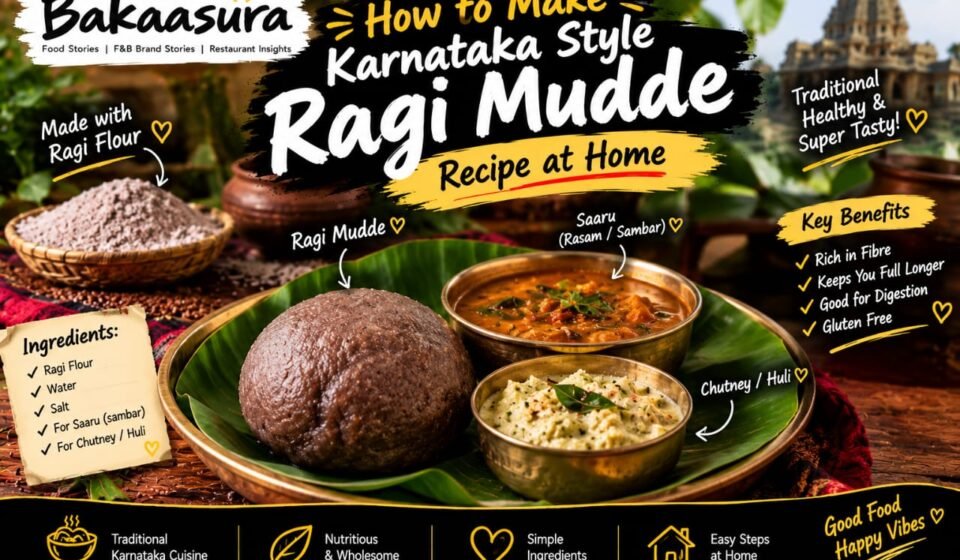

Ragi Mudde is one of the most traditional and comforting foods of Karnataka. Made with simple ingredients such as ragi flour, water and salt, this soft finger millet ball has been a staple in many Karnataka households for generations. It is particularly associated with rural and central Karnataka cuisine and is traditionally enjoyed with spicy saaru, bassaru, sambar or meat-based curries.
Although the ingredient list is short, preparing smooth Ragi Mudde requires the right technique. The flour needs to be cooked properly and stirred well to prevent lumps and achieve a soft, smooth texture. This Karnataka-style Ragi Mudde recipe explains the process step by step so you can make authentic ragi balls at home.
What Is Ragi Mudde?
Ragi Mudde is a traditional Karnataka dish prepared by cooking finger millet flour with water and shaping the cooked mixture into round balls. The word mudde refers to the ball-shaped preparation.
Ragi Mudde is traditionally served hot with spicy saaru or bassaru. Karnataka Tourism describes it as a staple food in parts of central Karnataka and notes that it is commonly paired with spicy rasam, sambar or curd.
Unlike roti or dosa, Ragi Mudde is not rolled or baked. The cooked ragi mixture is worked into a smooth dough and shaped while warm.
Ragi Mudde Recipe at a Glance
| Details | Information |
|---|---|
| Preparation Time | 5–10 minutes |
| Cooking Time | 15–20 minutes |
| Total Time | About 25 minutes |
| Servings | 2–3 |
| Cuisine | Karnataka |
| Course | Main Course |
| Difficulty | Medium |
Ingredients for Karnataka Style Ragi Mudde
Main Ingredients
- 1 cup ragi flour
- 2½ cups water
- ½ teaspoon salt, or to taste
- 1 teaspoon ghee, optional
For Shaping
- A little water for wetting your hands
- A small amount of ghee or oil, optional
A simple traditional preparation can be made with just ragi flour, water and salt. Some home recipes add a little ghee for flavour and a smoother finish.
How to Make Ragi Mudde at Home
Step 1: Prepare the Ragi Flour
Take the ragi flour in a bowl and break up any lumps.
For an especially smooth Mudde, you can sieve the flour before cooking.
Set aside about 2 tablespoons of the flour. This portion will be mixed with water to create a smooth slurry.
Step 2: Prepare the Ragi Slurry
Take the reserved 2 tablespoons of ragi flour in a small bowl.
Add about ¼ to ½ cup water and whisk thoroughly until there are no lumps.
Keep this slurry aside.
This step helps make the cooking process easier and reduces the chance of forming large lumps when the flour meets the hot water.
Step 3: Boil the Water
Pour the remaining water into a heavy-bottomed kadai or saucepan.
Add salt and, if using, about 1 teaspoon of ghee.
Bring the water to a proper boil over medium-high heat.
Step 4: Add the Ragi Slurry
Once the water begins boiling, reduce the heat slightly.
Slowly add the prepared ragi slurry while stirring continuously.
Cook for a couple of minutes until the mixture begins to thicken.
Step 5: Add the Remaining Ragi Flour
Add the remaining ragi flour over the hot mixture.
Using a sturdy wooden spatula or traditional Mudde stick, gently press the flour into the boiling mixture.
Do not leave the mixture unattended because lumps can form quickly.
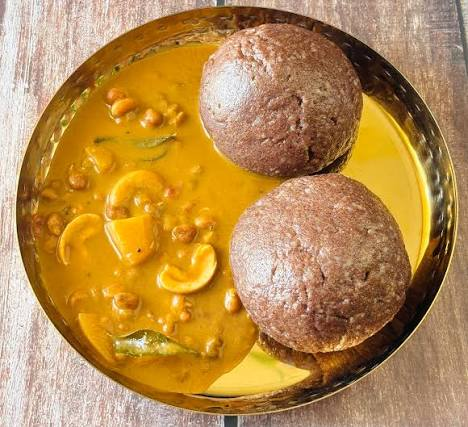
Read this – Jolada Rotti & Ennegai – North Karnataka’s Traditional Food
Step 6: Cover and Cook
Make a small opening in the centre of the flour mixture so that some of the hot water can reach the flour.
Cover the pan and cook over low heat for about 4–5 minutes.
This allows the ragi flour to cook through before vigorous mixing.
Step 7: Mix the Ragi Thoroughly
Remove the lid and start mixing the ragi vigorously.
Use a strong wooden spatula to press and fold the mixture repeatedly.
Continue stirring until the flour and water come together into a thick, smooth dough.
The mixture should no longer have visible dry flour or raw-tasting portions.
Step 8: Cook Until Smooth
Continue cooking and stirring over low heat for another 5–8 minutes.
The ragi mixture should become smooth, soft and cohesive and should begin pulling away from the sides of the pan.
Proper cooking is important because undercooked ragi can leave a raw taste and gritty texture.
Step 9: Rest the Mixture Briefly
Turn off the heat and allow the mixture to rest for a minute or two.
Do not let it cool completely because Ragi Mudde is easiest to shape while it is still warm.
Step 10: Shape the Ragi Mudde
Wet your hands with water or lightly grease them with a little ghee.
Take a portion of the hot ragi mixture.
Carefully roll it between your palms until it becomes a smooth, round ball.
Repeat with the remaining mixture.
The Mudde should have a smooth surface without cracks.
Tips for Making Soft Ragi Mudde
Use Fresh Ragi Flour
Fresh ragi flour gives better flavour and aroma. Older flour may sometimes develop a slightly bitter taste.
Use a Heavy-Bottomed Pan
A heavy vessel distributes heat more evenly and reduces the chance of the ragi sticking or burning.
Stir Thoroughly
Continuous and vigorous stirring is one of the most important steps. It helps remove lumps and produces the smooth texture associated with good Ragi Mudde.
Cook the Flour Properly
Do not rush the cooking process. The ragi should lose its raw taste before you shape the Mudde.
Shape While Warm
The mixture becomes firmer as it cools. Shape the Mudde while it is still warm and manageable.
Keep Water Nearby
Wet your hands before shaping each ball. This prevents the hot mixture from sticking to your palms and makes it easier to create a smooth surface.
How to Serve Ragi Mudde
Ragi Mudde is traditionally served with a flavorful curry or thin gravy.
Popular combinations include:
- Ragi Mudde with Bassaru
- Ragi Mudde with Soppu Saaru
- Ragi Mudde with Chicken Saaru
- Ragi Mudde with Mutton Saaru
- Ragi Mudde with Vegetable Sambar
- Ragi Mudde with Avarekalu Saaru
- Ragi Mudde with spicy vegetable curry
The mild flavour of ragi pairs especially well with spicy and flavorful gravies. Karnataka Tourism specifically highlights saaru or bassaru as traditional accompaniments.
Traditional Way to Eat Ragi Mudde
Ragi Mudde is traditionally eaten differently from most Indian breads.
A small portion is broken off from the Mudde, shaped with the fingers and combined with hot saaru or curry. The bite is traditionally swallowed rather than chewed extensively.
For a more authentic experience, serve the Mudde hot with plenty of spicy saaru.
Read this – Famous Food in Karnataka
Common Mistakes to Avoid
1. Adding Flour to Lukewarm Water
The water should be properly hot before adding the ragi mixture. This helps the flour cook correctly.
2. Not Stirring Enough
Insufficient stirring can result in lumps and an uneven texture.
3. Using Too Much Water
Excess water can make the mixture too loose and difficult to shape.
4. Using Too Little Water
Too little water can produce dry, hard or cracked Mudde.
5. Shaping After It Gets Cold
The mixture becomes firm as it cools, making it harder to achieve smooth balls.
6. Leaving Raw Flour in the Centre
Make sure the ragi flour is fully cooked before shaping. The finished Mudde should have a smooth texture without a raw flour taste.
Ragi Mudde Variations
Soft Ragi Mudde
Use a slightly higher proportion of water and cook the mixture thoroughly for a softer texture.
Ragi Mudde with Ghee
A small amount of ghee can be added during cooking or used while shaping for extra richness.
Mixed Millet Mudde
Some modern home cooks combine ragi with other millet flours. This creates a variation while retaining the basic Mudde preparation method.
However, traditional Karnataka-style Ragi Mudde is primarily made with ragi flour and water.
What to Serve With Ragi Mudde
A complete Karnataka-style meal can pair Ragi Mudde with a spicy gravy and a simple vegetable side.
Some excellent combinations include:
| Ragi Mudde | Best Accompaniment |
|---|---|
| Ragi Mudde | Bassaru |
| Ragi Mudde | Soppu Saaru |
| Ragi Mudde | Chicken Saaru |
| Ragi Mudde | Mutton Saaru |
| Ragi Mudde | Vegetable Sambar |
| Ragi Mudde | Avarekalu Saaru |
The curry provides the stronger flavour while the mild ragi ball acts as the hearty base of the meal.
Why Ragi Mudde Is Important in Karnataka Cuisine
Ragi Mudde is more than an everyday recipe. It represents Karnataka’s traditional food culture and the importance of finger millet in the state’s cuisine.
It is especially associated with rural and central Karnataka and continues to be served in homes and traditional restaurants. Its simple preparation also demonstrates how staple grains can form the centre of a satisfying regional meal.
Read this – Traditional Karnataka Recipes – Authentic Dishes to Try
Key Highlights
- Ragi Mudde is a classic Karnataka staple made from finger millet flour.
- The basic recipe requires only ragi flour, water and salt.
- Making a small ragi slurry helps prevent lumps.
- Continuous stirring is essential for a smooth texture.
- Cook the mixture until the raw flour taste disappears.
- Shape the Mudde while it is still warm.
- Serve it hot with saaru, bassaru, sambar or spicy curries.
- Ragi Mudde is an excellent way to experience traditional Karnataka cuisine.
Conclusion
Karnataka Style Ragi Mudde is a simple yet deeply traditional dish that showcases the importance of ragi in Karnataka’s food culture. Although it uses only a handful of ingredients, the key to making perfect Mudde lies in controlling the water, cooking the flour properly and stirring it until it becomes smooth and lump-free.
Serve freshly prepared Ragi Mudde with hot saaru, bassaru, sambar or a flavorful chicken or mutton curry for a comforting Karnataka-style meal. Once you master the technique, this traditional dish can become a simple and satisfying addition to your home-cooked menu.



[…] Read this – How to Make Karnataka Style Ragi Mudde Recipe at Home […]