
Imagine sitting inside a restaurant surrounded by black volcanic landscapes while your meal is cooked using heat rising naturally from beneath the earth. This unusual dining experience is the story of Restaurante El Diablo, located at Islote de Hilario in Timanfaya National Park, Lanzarote, Spain.
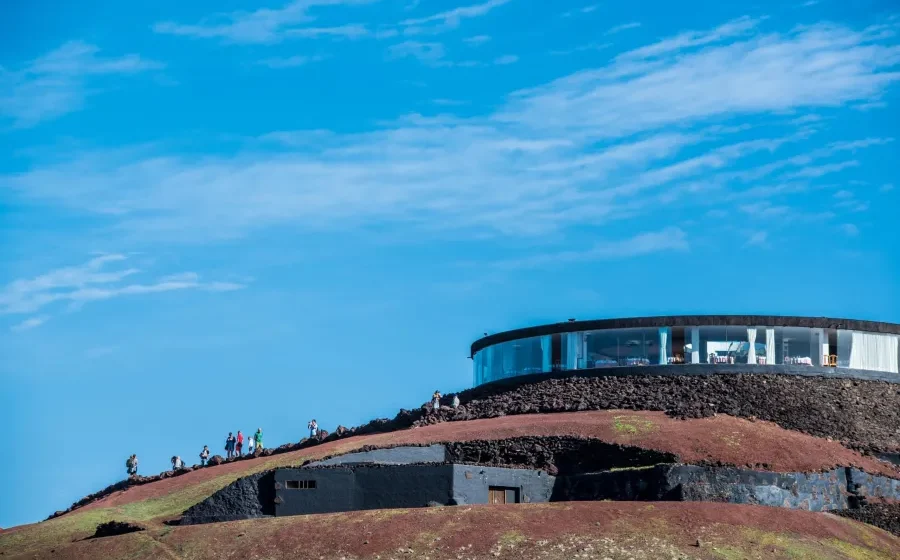
Designed by celebrated Lanzarote artist César Manrique, the restaurant was created in 1970 as part of a wider effort to integrate tourism facilities into the island’s extraordinary volcanic landscape. Today, El Diablo is known for its panoramic views, distinctive architecture and grill that uses natural geothermal heat.
The Story Behind Restaurante El Diablo
Restaurante El Diablo was developed during the transformation of Timanfaya into a carefully managed visitor destination.
César Manrique worked with collaborators including architect Eduardo Cáceres and artist Jesús Soto. Their approach was based on integrating architecture with nature rather than competing with the dramatic volcanic surroundings.
The restaurant was built at Islote de Hilario, an area where the volcanic activity beneath the surface remains particularly noticeable.
Timanfaya’s landscape was created by major volcanic eruptions, especially those between 1730 and 1736. The area was officially declared a National Park in 1974.
César Manrique’s Unique Design
One of the biggest reasons El Diablo stands out is its architecture.
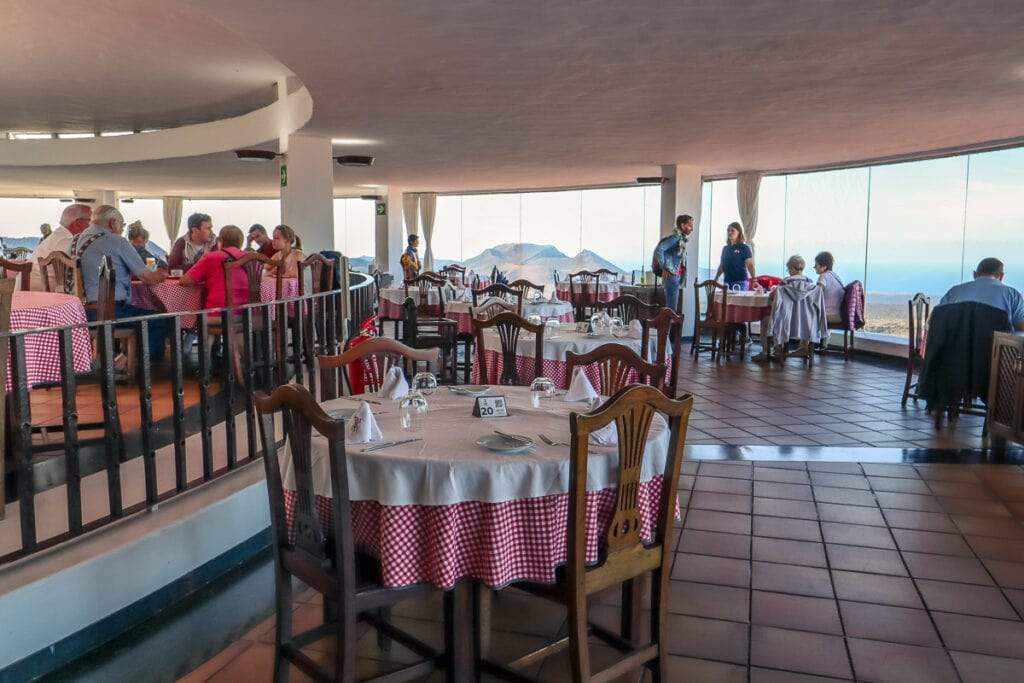
The restaurant has a largely circular form with a large glass façade that opens the dining room toward the surrounding lava fields. Instead of hiding the landscape, Manrique made it the central part of the experience.
The building also incorporates volcanic stone and curved forms that visually connect it with Lanzarote’s terrain.
Inside, elements of the design reference traditional Lanzarote agricultural structures, including the curved stone walls known as socos, traditionally used to protect vines from strong winds.
The Restaurant That Cooks With Volcanic Heat
The most famous feature of El Diablo is its cooking method.
Instead of relying entirely on conventional gas or electric cooking, the restaurant uses natural geothermal heat from the volcanic ground.
The grill is positioned above a volcanic heat source. CACT Lanzarote states that the grill sits over a five-metre-deep well where the natural temperature reaches around 250°C.
This makes the restaurant’s famous grill more than a cooking technique—it is part of the geological experience of visiting Timanfaya.
What Food Is Famous at El Diablo?
The restaurant is particularly associated with grilled meat and vegetables prepared using the natural volcanic heat.
Traditional Canarian foods are also part of the dining experience. Local information highlights dishes and ingredients such as:
- Grilled meats
- Grilled vegetables
- Papas arrugadas, or Canarian wrinkled potatoes
- Canarian mojo sauces
- Local Lanzarote wines
The Tinajo municipal tourism information specifically mentions papas arrugadas, pork and Canarian mojos among the restaurant’s specialties.
The exact menu can change, so visitors should check the current offering before planning a meal.
Read this – The Rhythms Restaurant – Hanoi Famous Vietnamese Food & Signature Dishes
Dining With a View of Timanfaya
Food is only one part of the experience.
The restaurant’s large circular glass façade provides views across the malpaís, the rugged volcanic terrain surrounding the building.
This creates an unusual combination: diners can enjoy a meal while looking across lava fields formed by volcanic activity centuries ago.
For travelers, the experience is therefore closely connected to the landscape rather than being a standalone restaurant visit.
Why Is El Diablo So Special?
Several elements come together to make the restaurant distinctive.
1. Natural Volcanic Cooking
The restaurant uses heat from the volcanic ground instead of creating the heat entirely through conventional cooking equipment.
2. César Manrique Architecture
The building was specifically designed to fit into the volcanic environment and make the surrounding landscape part of the experience.
3. Timanfaya Location
El Diablo is situated inside Timanfaya National Park, one of Lanzarote’s most important volcanic landscapes.
4. Canarian Food
The restaurant connects the unusual cooking method with local dishes, sauces and wines.
A Restaurant Protected for Its Architectural Value
El Diablo is important not only as a restaurant but also as a piece of Lanzarote’s architectural and cultural heritage.
The Cabildo of Lanzarote initiated proceedings to recognize the building as a Bien de Interés Cultural (BIC) monument. Official documentation highlights its architectural and artistic values and its integration into the volcanic landscape.
This recognition reflects the broader importance of César Manrique’s work in shaping Lanzarote’s approach to architecture, tourism and landscape preservation.
Read this – Rio de Janeiro Restaurant – Famous Feijoada & Brazilian Food
Restaurante El Diablo Today
El Diablo continues to operate at Islote de Hilario within Timanfaya National Park. CACT Lanzarote says the restaurant does not accept advance reservations, with tables assigned according to availability when visitors arrive.
Its location is:
Restaurante El Diablo
Islote de Hilario, Timanfaya National Park
Lanzarote, Canary Islands, Spain
Because the restaurant is located within the national park, visiting El Diablo is best understood as part of a wider Timanfaya experience rather than simply a restaurant stop.
The Story Behind Its Success
The story of Restaurante El Diablo is unusual because its identity comes directly from its surroundings.
Rather than importing a dramatic concept into Lanzarote, César Manrique used the island’s existing volcanic landscape as the foundation for the restaurant’s design and experience.
The result is a restaurant where architecture, geology, tourism and food are closely connected. The volcanic ground provides the heat, the lava landscape provides the view and the building provides a carefully designed setting for visitors.
Read this – The French Laundry California: Story of a Famous Restaurant
Key Points
- Location: Islote de Hilario, Timanfaya National Park, Lanzarote
- Designed by: César Manrique and collaborators
- Created: 1970
- Famous for: Cooking with natural volcanic heat
- Signature experience: Grilled meat and vegetables over geothermal heat
- Popular local foods: Papas arrugadas, mojo and Canarian specialties
- Architecture: Circular design with large glass walls and volcanic materials
- Setting: Timanfaya’s volcanic landscape
Conclusion
Restaurante El Diablo Lanzarote is much more than a restaurant with an unusual grill. It represents César Manrique’s vision of combining architecture, art, tourism and nature without overpowering the landscape.
Its most memorable feature is undoubtedly its use of natural volcanic heat to cook food, but the surrounding lava fields, circular architecture and Canarian cuisine make the experience even more distinctive.
For travelers exploring Lanzarote, El Diablo offers a rare opportunity to experience the island’s volcanic character not only through sightseeing, but also through food.