


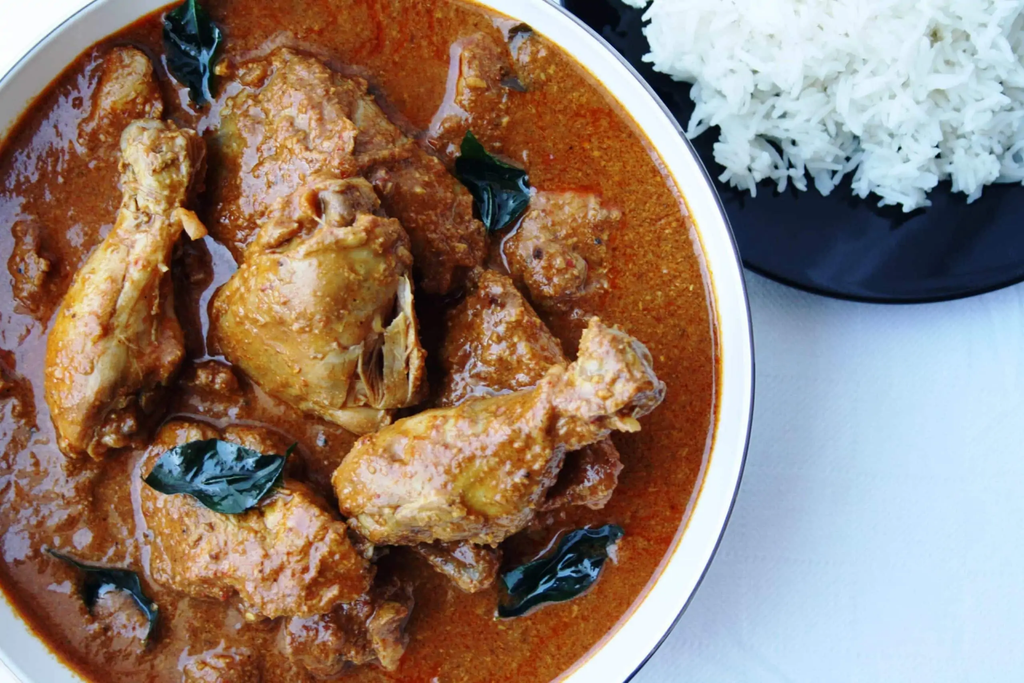
Kori Gassi is a traditional Mangalorean chicken curry known for its rich coconut base, roasted spices, and distinctive coastal flavors. The word “Kori” means chicken in Tulu, while “Gassi” refers to a thick, flavorful curry. It is a much-loved dish from the coastal Karnataka region and is commonly prepared for special occasions as well as family meals.
The curry gets its characteristic taste from freshly roasted spices, coconut, tamarind, and aromatics. The combination creates a gravy that is creamy, spicy, slightly tangy, and deeply aromatic. Kori Gassi is traditionally served with Neer Dosa, rice, or soft Mangalore Buns, making it a classic Mangalorean meal.
Ingredients for Kori Gassi
For the Chicken
- 500 g chicken, cut into medium-sized pieces
- 1 medium onion, finely chopped
- ½ teaspoon turmeric powder
- Salt, to taste
- 1 tablespoon oil
For the Masala
- 1 cup grated fresh coconut
- 1 medium onion, sliced
- 5–6 dried red chilies
- 1 teaspoon coriander seeds
- ½ teaspoon cumin seeds
- ½ teaspoon fenugreek seeds
- ½ teaspoon black pepper
- 1 small cinnamon stick
- 3–4 cloves
- 2 cardamom pods
- 1 teaspoon poppy seeds, optional
- Small piece of tamarind
- 4–5 garlic cloves
For Tempering
- 1 tablespoon coconut oil
- ½ teaspoon mustard seeds
- 1 sprig curry leaves
- 1–2 dried red chilies
How to Prepare Kori Gassi
Step 1: Marinate the Chicken
Clean the chicken pieces and place them in a bowl. Add turmeric and salt, mix well, and set aside for about 15–20 minutes.
This simple marination allows the chicken to absorb the basic seasoning before it goes into the curry.
Read this – How to Make Karnataka Style Akki Roti Recipe at Home
Step 2: Roast the Spices
Heat a pan over low to medium heat. Dry roast the dried red chilies, coriander seeds, cumin seeds, fenugreek seeds, pepper, cinnamon, cloves, cardamom, and poppy seeds if using.
Roast the spices carefully until fragrant. Avoid burning them, as even slightly burnt spices can make the curry bitter.
Add the sliced onion and grated coconut and roast until the coconut develops a light golden color.
Step 3: Grind the Masala
Allow the roasted ingredients to cool slightly. Transfer them to a blender along with garlic and tamarind.
Add a little water and grind everything into a smooth, thick paste. The masala should have a rich consistency without large pieces of coconut or spices.
Cooking the Kori Gassi
Step 4: Cook the Chicken
Heat coconut oil in a heavy-bottomed pan. Add the chopped onion and sauté until it becomes soft and lightly golden.
Add the marinated chicken pieces and sauté for several minutes until the chicken changes color.
Pour in the prepared coconut masala and mix well. Add enough water to achieve your preferred curry consistency.
Cover the pan and cook over medium heat until the chicken becomes tender and fully cooked.
Read this – How to Make Soft & Fluffy Mangalore Buns Recipe
Step 5: Prepare the Tempering
Heat a small amount of coconut oil in another pan. Add mustard seeds and allow them to splutter.
Add curry leaves and dried red chilies. Fry briefly until aromatic, then pour the tempering over the chicken curry.
Mix gently and simmer the Kori Gassi for another few minutes before serving.
Tips for Authentic Kori Gassi
- Fresh coconut gives the curry a richer flavor.
- Roast the spices over medium-low heat to prevent burning.
- Adjust the number of red chilies according to your preferred spice level.
- Use coconut oil for a more traditional coastal Karnataka flavor.
- Do not add excessive water; Kori Gassi is best with a thick, flavorful gravy.
- Allow the curry to rest for a few minutes before serving so the flavors can blend.
What to Serve with Kori Gassi
Kori Gassi is traditionally paired with soft and thin Neer Dosa, which absorbs the flavorful coconut gravy beautifully. It also tastes excellent with steamed rice, Mangalore Buns, or rice-based dishes.
For a traditional Mangalorean meal, serve hot Kori Gassi with freshly prepared Neer Dosa and a side of coconut-based accompaniment.
Read this – How to Make Soft & Fluffy Mangalore Buns Recipe
Key Points
- Kori Gassi is a traditional chicken curry from coastal Karnataka.
- Roasted coconut and spices give the curry its distinctive flavor.
- Coconut oil adds an authentic Mangalorean touch.
- Kori Gassi pairs especially well with Neer Dosa, rice, and Mangalore Buns.
Conclusion
Kori Gassi is a flavorful representation of Mangalorean and coastal Karnataka cuisine. Its combination of roasted spices, fresh coconut, tamarind, and tender chicken creates a rich curry that is both aromatic and comforting. Although the masala requires a little preparation, the depth of flavor makes it worth the effort. Serve it hot with Neer Dosa, rice, or Mangalore Buns for an authentic coastal Karnataka-style meal.




[…] Read this – How to Make Kori Gassi at Home – Easy Mangalorean Recipe […]