
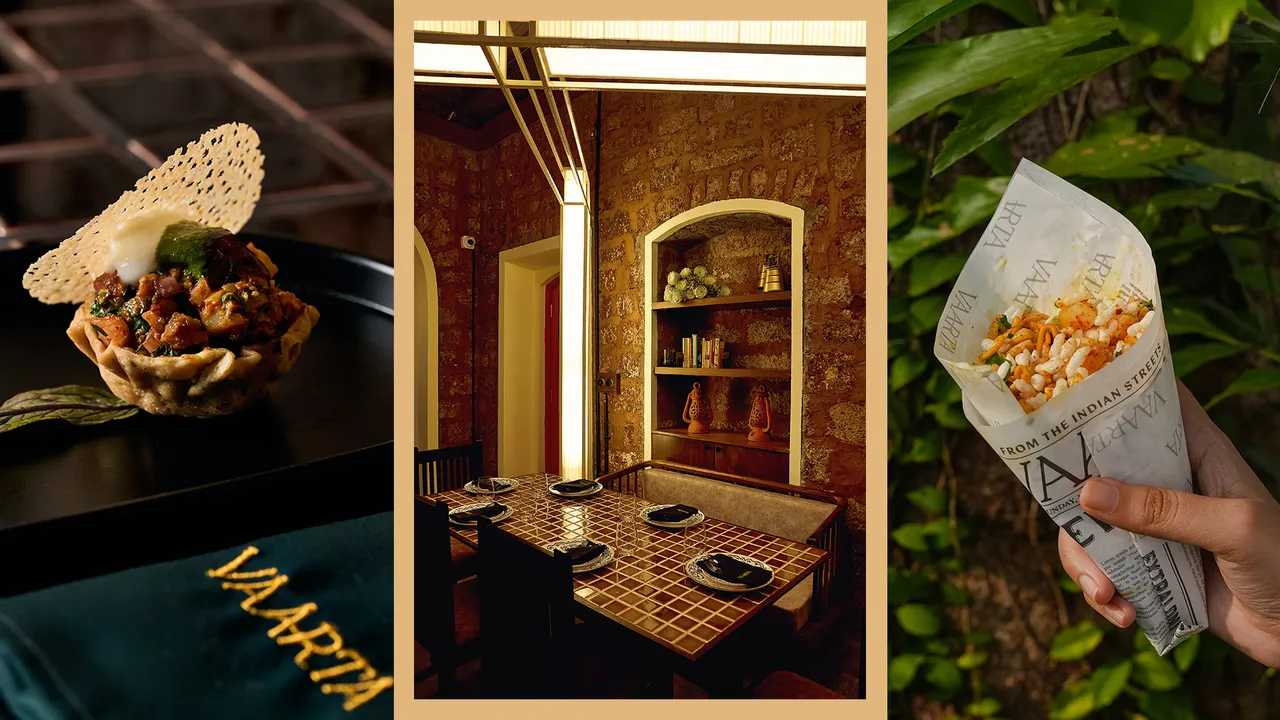

In Sangolda, Goa, an old home has been given a new culinary identity through Vaarta, an interactive Indian street food dining experience that brings together food, heritage, nostalgia and storytelling. Set inside a beautifully restored 160-year-old home, Vaarta offers a setting that feels intimate and unhurried, allowing guests to experience familiar Indian flavours in a different way.
Conceptualised by Neha Mehta, Vaarta was created around the idea that food can be more than something served on a plate. Here, popular street food becomes part of an experience involving conversation, memories and participation. From building your own puchkas at the table to preparing barf ka gola, guests become part of the dining process rather than simply watching it unfold.
The Story Behind Vaarta
Vaarta was conceived with a simple but distinctive idea: to revisit Indian street food through an immersive dining format without losing the character that makes these foods special.
Street food in India is deeply connected to memory. A plate of chaat, a puchka from a neighbourhood vendor or a colourful barf ka gola can instantly remind people of childhood, travel, family outings or evenings spent with friends.
Vaarta builds on those emotional connections while presenting the food in a more thoughtful dining environment.
A Concept by Neha Mehta
The concept was developed by Neha Mehta, with an emphasis on storytelling and creating meaningful interactions around food.
Instead of turning Indian street food into something entirely unfamiliar, Vaarta focuses on retaining its roots while adding elements of participation and refined presentation. This approach allows guests to recognise familiar flavours while experiencing them in a new setting.
Dining Inside a 160-Year-Old Home
One of Vaarta’s defining characteristics is its location.
The restaurant is situated inside a 160-year-old heritage home in Sangolda, Goa. Rather than allowing the interiors to become secondary to the dining concept, Vaarta has been thoughtfully designed around the character of the existing property.
The heritage setting creates an atmosphere that is very different from a conventional contemporary restaurant. The home provides a sense of history, warmth and intimacy, while the food brings a modern layer to the experience.
Letting the Heritage Home Lead
The philosophy behind the space is not about overwhelming the old architecture with elaborate restaurant design. Instead, the heritage home remains an important part of the experience.
This creates a relaxed environment where guests can slow down, enjoy their food and spend time in conversation.
The combination of an old Goan home and contemporary Indian street food creates a natural contrast—heritage on one side and playful culinary experiences on the other.
Indian Street Food With an Interactive Twist
Vaarta’s approach goes beyond simply serving street food-inspired dishes.
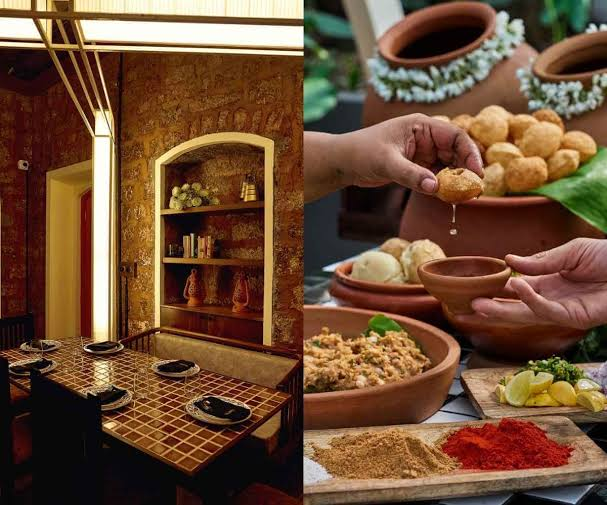
Interactive elements are incorporated directly into the dining experience, encouraging guests to participate in preparing or finishing certain foods at the table.
One example is the build-your-own puchka experience. Rather than receiving a completely prepared plate, diners can assemble their puchkas themselves, adding a playful and social element to the meal.
Barf Ka Gola at the Table
Another memorable element is the barf ka gola, which is brought into the dining experience in an interactive format.
A familiar Indian street-side treat is transformed into a shared table moment, connecting nostalgia with the restaurant’s more refined approach to presentation.
These elements help Vaarta create an experience where diners are not passive participants. The preparation, presentation and interaction become part of the meal itself.
When Food Becomes Storytelling
The name Vaarta reflects the idea of conversation and storytelling.
Food has traditionally been an important part of Indian social life. Meals bring families and friends together, while recipes and food memories are often passed from one generation to another.
Vaarta takes this familiar idea and makes it central to the dining experience. The restaurant encourages guests to slow down, talk, share and reconnect with familiar flavours.
The result is an experience where the meal can become a conversation starter rather than simply a sequence of dishes.
A Different Kind of Goa Dining Experience
Goa is widely recognised for its beaches, nightlife, Portuguese-influenced architecture and diverse food culture. Its restaurant scene has also expanded significantly, with concepts ranging from traditional Goan cuisine to international fine dining.
Vaarta adds another dimension to this landscape by focusing on Indian street food within a heritage setting.
Its location in Sangolda provides a quieter backdrop compared with Goa’s busier tourist areas, making the experience feel more intimate and deliberate.
The Philosophy Behind Vaarta
At its heart, Vaarta is built around three connected ideas: food, memory and connection.
The food draws from India’s street food culture. The heritage home provides a sense of place and history. Interactive elements encourage guests to participate and share the experience.
Rather than treating street food only as a collection of dishes, Vaarta presents it as part of India’s larger cultural and emotional landscape.
Location
Vaarta
House – 280, Livrament Vaddo, Casa Livrament,
Sangolda, Goa, India.
The heritage-home setting in Sangolda forms an important part of the restaurant’s identity and distinguishes the experience from a conventional street food restaurant.
Key Highlights
- Vaarta is positioned as Goa’s first interactive Indian street food dining experience.
- The restaurant is located inside a restored 160-year-old home in Sangolda.
- The concept was created by Neha Mehta.
- Indian street food is presented with a focus on storytelling and refined presentation.
- Guests can participate in interactive experiences such as build-your-own puchkas.
- Barf ka gola is also presented as an interactive table experience.
- The heritage property plays an important role in the restaurant’s atmosphere.
- Vaarta focuses on food, nostalgia, conversation and connection.
Conclusion
Vaarta Goa offers a distinctive interpretation of Indian street food by bringing familiar flavours into a historic and intimate setting. Its concept goes beyond presentation, using participation, storytelling and nostalgia to make dining a shared experience.
Inside the 160-year-old home in Sangolda, food becomes a way to revisit memories while creating new ones. With its interactive approach, heritage surroundings and emphasis on conversation, Vaarta presents Indian street food not just as something to eat, but as something to experience and remember.