


Behind every successful restaurant is a story that goes far beyond food. There are years of learning, changing customer expectations, business decisions, creative experiments, operational challenges and, above all, the courage to start again.
The story of LUPA Bengaluru is closely connected to that idea of reinvention. Located at Spencer’s Towers on Mahatma Gandhi Road, LUPA emerged from the partnership between celebrated chef-restaurateur Manu Chandra and hospitality professional Chetan Rampal. Rather than being their first step into the restaurant business, LUPA represents the experience they accumulated through years of working in hospitality and building restaurant brands.
LUPA opened to the public in February 2023, becoming a major new chapter in Manu Chandra’s career after his departure from the Olive Group in 2021. The restaurant was conceived as more than simply another dining outlet—it was an opportunity to bring years of lessons, ideas and culinary ambition together under one roof.
The Beginning: Years of Experience Before LUPA
The story of LUPA actually begins long before the restaurant opened its doors.
Manu Chandra built his reputation through years in the Indian hospitality industry, while Chetan Rampal developed extensive operational experience during his long association with the Olive Group. The two eventually became business partners and worked together on restaurant concepts including Monkey Bar, The Fatty Bao and Toast & Tonic.
That experience became one of LUPA’s biggest foundations.
Instead of trying to build a restaurant based purely on a trend, the founders were able to draw upon years of understanding how restaurants work—from kitchens and service to customer expectations, design, branding and hospitality.
This is what makes LUPA’s journey particularly interesting: the restaurant may have been new, but the thinking behind it was built over decades.\
A Major Career Change Became a New Beginning
One of the most important turning points came in 2021.
After spending 17 years with the Olive Group, Manu Chandra stepped away from the company. That decision marked the end of an important chapter in his professional journey. But instead of treating the transition as an ending, Chandra and Rampal used it as an opportunity to create something of their own.
This period can be viewed as one of the most significant challenges in the journey toward LUPA.
Leaving an established organisation after years of building successful brands meant entering a new phase where the team had to rethink its identity, business direction and future.
The result was Manu Chandra Ventures, which eventually became the platform through which LUPA was developed.
Building LUPA Was About More Than Opening a Restaurant
Creating a restaurant of LUPA’s scale required considerably more than developing a menu.
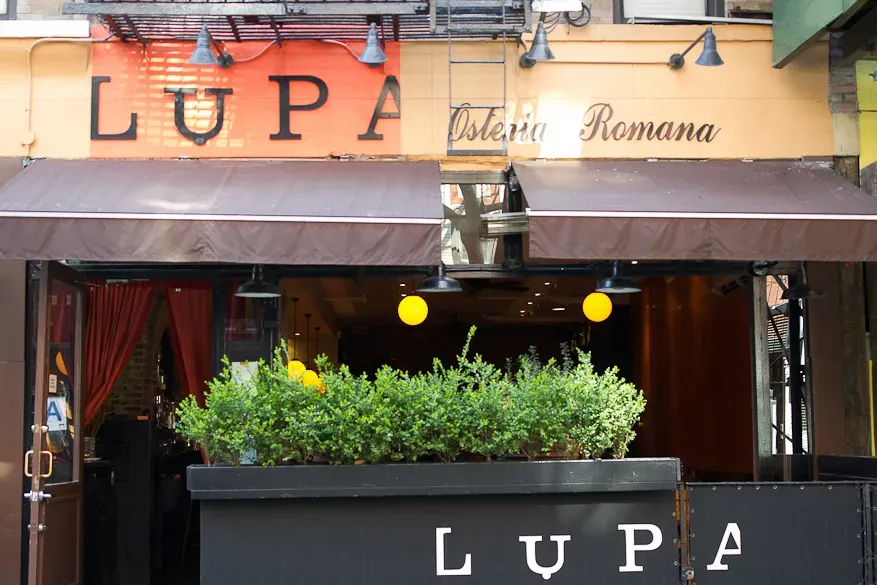
The restaurant occupies around 11,000 square feet, with different spaces designed for different experiences. Its design combines influences from an Italian villa with elements inspired by New York Art Deco, while incorporating Indian materials such as marble, granite, brick, terracotta and timber.
That meant the founders were not simply building a place where customers could sit down and eat.
They were creating an entire environment.
From the courtyard and main dining area to the bar, private dining room, wine cellar, salumeria and gelateria, every section was designed to contribute to the overall LUPA experience.
The Challenge of Turning an Idea Into Reality
One of the less visible challenges in the restaurant industry is transforming an ambitious idea into something that works operationally every day.
LUPA’s kitchen itself reflects that philosophy. The restaurant has a two-level kitchen designed around workflow, visibility and consistency, combining traditional and modern equipment. Its dedicated salumeria and gelateria add further layers to the operation.
This shows an important lesson from LUPA’s journey:
A restaurant’s success is not built only in the dining room. It is built behind the scenes as well.
Kitchen planning, sourcing, preparation, service, staff coordination and consistency all have to work together before a customer experiences the final dish.
From European Inspiration to a Bengaluru Identity
LUPA’s culinary philosophy draws inspiration from European flavours while remaining connected to locally sourced ingredients.
The restaurant describes its cuisine as evolutionary, with an emphasis on sourcing, innovation and creating an experience that encourages diners to return and discover something new.
This balance was important.
Rather than simply reproducing European food, LUPA sought to reinterpret those influences through its own approach. That reflects the larger philosophy behind the restaurant: take inspiration from elsewhere, but create something with its own identity.
Why the Name LUPA Matters
Even the name has a story.
LUPA comes from the mythological she-wolf associated with the founding story of Rome, who is said to have raised Romulus and Remus.
For Manu Chandra, the story of Lupa represented an untameable spirit and also connected with his fascination with history. The name eventually became part of the restaurant’s visual and conceptual identity.
It is a fitting name for a restaurant that was itself born from a new beginning.
The People Behind the Journey
Manu Chandra – Chef and Founder
Manu Chandra is one of the central figures behind LUPA.
His career has involved building and developing multiple food and beverage concepts, while his culinary approach has continued to evolve over the years. LUPA became an opportunity to bring many of those experiences together in one ambitious project.
Chetan Rampal – Hospitality and Business Partner
Chetan Rampal brings a different but equally important strength to the partnership.
His background is deeply rooted in restaurant operations and hospitality management. He joined the Olive Group early in his career and later became an entrepreneur alongside Manu Chandra. His role has included helping shape the strategic direction of their hospitality ventures.
Together, the combination of culinary creativity and operational experience became one of LUPA’s defining strengths.
LUPA’s Biggest Lesson: Reinvention Takes Courage
The story of LUPA offers a useful lesson for entrepreneurs.
Sometimes building something successful does not mean starting from zero. It can mean taking everything you have learned from previous experiences and using that knowledge to create something better suited to your next chapter.
For LUPA, years of hospitality experience, a major professional transition and a willingness to experiment eventually came together in one destination.
That makes the restaurant’s story less about overnight success and more about experience, reinvention and persistence.
What Makes LUPA Different?
Several elements contribute to LUPA’s identity:
- A strong partnership between Manu Chandra and Chetan Rampal
- Years of hospitality experience behind the concept
- European-inspired cuisine with local influences
- An approximately 11,000-square-foot dining space
- Multiple dining environments under one roof
- A dedicated salumeria
- An in-house gelateria
- A wine cellar
- A large professional kitchen designed around operational flow
- A design inspired by Tuscany and New York Art Deco
Together, these elements make LUPA more than a conventional restaurant.


[…] Read this – LUPA Bengaluru – The Story Behind the Restaurant […]
[…] Read this – LUPA Bengaluru – The Story Behind the Restaurant […]